



Cisco CCNA Certification Course Overview
Cisco Certified Network Associate certification is a beginner-friendly and valuable credential for aspiring IT or networking professionals. The training helps you develop a strong understanding of network security, networking concepts, automation, troubleshooting, switching, and routing. Build practical skills required to install, manage, secure, and configure networks in modern business environments through real-world case studies and lab sessions. Learn from a curriculum designed by industry experts - master important concepts such as networking fundamentals, network access, IP connectivity, security fundamentals, automation and programmability, Internet Protocol services, and IP connectivity. Offered by Cisco Systems, this CCNA course is suitable for aspiring Network Engineers, Systems Administrators, IT Support Specialists, Network Administrators, and so on. Enroll for iCert Global’s Cisco CCNA training course to prepare thoroughly for the CCNA 200-301 certification exam.
Cisco CCNA Course Highlights
Flexible Learning Options
Choose a learning schedule that works for you. Learn at your own pace with weekend classes, weekday batches, and 4-day bootcamps.
24X7 Learning Support
Participate in doubt-clearing and interactive mentoring sessions for uninterrupted learning.
Gain Practical Expertise
Engage in real-world scenarios, hands-on labs, and configuration exercises to apply theoretical concepts and resolve real-world networking challenges.
Get Exam-Ready
Take mock exams and practice tests to accelerate your exam preparation. Practice scenario-based questions and gain a sound understanding of the key topics covered in the exam.
Wireless & Network Automation
Understand how automation tools and modern wireless networking technologies help manage modern networks effectively. Gain expertise in programmable networks, SDN, and APIs.
Advanced Subnetting Skills
Learn how to design networks while minimizing IP address wastage. Master subnet calculations, complex IP addressing, and Variable Length Subnet Masking (VLSM).
Corporate Training

Ready to transform your team?
Get a custom quote for your organization's training needs.
Upcoming Schedule


Skills You Will Gain In Our Cisco Certification Training
IPv4 and IPv6 Networks
Learn how to troubleshoot, manage, and configure IPv4 and IPv6 networks. Develop the skills required to handle modern network infrastructures in real-business environments.
Network Operations
Master practical skills required to identify, troubleshoot, and address network issues in IT environments. Monitor, optimize, and maintain network operations.
Virtual Networks
Learn how to work with cloud networking and virtualization technologies. Develop the ability to configure virtual switches and VLANs.
Firewalls
Learn how to protect enterprise networks against cyber threats. Gain practical expertise needed to implement firewall policies, access control rules, VPNs, and NAT.
Networking
Gain the technical expertise required to perform networking-related tasks like routing, switching, and optimizing networks. Build the skills required to design and leverage scalable network infrastructures.
Basics of Storage Area Networks
Discover what Storage Area Networks are and how they connect to business servers. Learn how storage systems support business operations, backup strategies, and data availability.
Routers
Understand how routers exchange important information and identify network paths. Master the practical skills required to troubleshoot and build complex routed networks. Learn about standard routing protocols like BGP, EIGRP, and OSPF.
OSI Model
Gain a sound knowledge of each layer of the OSI model. Develop the practical skills required to implement the OSI framework to troubleshoot network issues.
Who Should Enroll for CCNA Online Course?
Network Engineers
IT Support Professionals
System Administrators
Network Administrators
Cybersecurity Professionals
Cloud and Infrastructure Professionals
Cisco Certified Network Associate Certification Roadmap


Why Get CCNA-Certified?
Latest Technology
Obtaining a CCNA certification showcases your ability to navigate network complexities. It also demonstrates that you’re familiar with the latest networking technologies, trends, and practices, which helps you stand out from non-certified peers.
Career Opportunities
The certification opens doors to advanced networking roles, such as Network Engineer, Systems Administrator, NOC Engineer, and more.
Develop Practical Skills
Master real-world, practical skills such as routing, IP connectivity, switching, automation, and network security.
Industry Recognition
The Cisco Certified Network Associate certification demonstrates to employers that you can design, implement, and manage modern enterprise networks.
CCNA 200-301 Certification Eligibility and Prerequisites
There are no strict prerequisites to enrol in the CCNA training program. However, to appear for the 200-301 CCNA exam, candidates are expected to:
IP Addressing Knowledge: Possess a sound understanding of IP addressing.
Networking Fundamentals: Know the basics of networking.
Experience (Recommended): Have at least 1 year of experience in leveraging Cisco solutions or products.
Course Modules & Curriculum
Spanning Tree Protocol (STP)
Purpose of STP, STP operation and convergence, Root Bridge election process, Port roles and states, Rapid Spanning Tree Protocol (RSTP), Multiple Spanning Tree (MST).
EtherChannel
EtherChannel concepts and benefits, Link aggregation techniques, PAgP (Port Aggregation Protocol), LACP (Link Aggregation Control Protocol), Configuring and verifying EtherChannel.
Advanced VLAN Technologies
VLAN pruning, Voice VLANs, Private VLAN concepts, VLAN troubleshooting.
Layer 3 Switching
Introduction to multilayer switching, Switch Virtual Interfaces (SVIs), Inter-VLAN routing using Layer 3 switches, Routed ports configuration.
High Availability and Redundancy
First Hop Redundancy Protocols (FHRP), HSRP (Hot Standby Router Protocol), VRRP (Virtual Router Redundancy Protocol), GLBP (Gateway Load Balancing Protocol), Network resiliency design principles.
Routing Fundamentals
Router architecture and functions, Routing table components, Static routing concepts, Default routes, Floating static routes, Route summarization.
Dynamic Routing Protocols
Introduction to dynamic routing, Distance Vector vs Link State protocols, Routing protocol metrics and administrative distance.
OSPF (Open Shortest Path First)
OSPF operation and concepts, OSPF neighbor relationships, OSPF areas and hierarchy, Single-area OSPF configuration, Multi-area OSPF concepts, OSPF route propagation, OSPF troubleshooting.
EIGRP (Enhanced Interior Gateway Routing Protocol)
EIGRP fundamentals, DUAL algorithm, EIGRP neighbor relationships, EIGRP metric calculations, Route advertisement and summarization, EIGRP troubleshooting.
IPv6 Routing
IPv6 routing concepts, Static IPv6 routing, OSPFv3 fundamentals, IPv6 route verification and troubleshooting.
Network Security Fundamentals
Cybersecurity principles, Common network threats and attacks, Security best practices, CIA Triad (Confidentiality, Integrity, Availability), Security policies and procedures.
Access Control Lists (ACLs)
Standard ACLs, Extended ACLs, Named ACLs, ACL placement guidelines, ACL troubleshooting.
Network Address Translation (NAT)
NAT concepts and operation, Static NAT, Dynamic NAT, PAT (Port Address Translation), NAT verification and troubleshooting.
WAN Technologies
WAN concepts and architectures, MPLS overview, Leased lines, Broadband connections, VPN technologies.
Virtual Private Networks (VPNs)
VPN fundamentals, Site-to-Site VPN concepts, Remote Access VPN concepts, IPSec basics, VPN security considerations.
Device Security
Securing routers and switches, SSH configuration, Password management, AAA concepts (Authentication, Authorization, Accounting), Local and centralized authentication.
Wireless Networking
Wireless LAN fundamentals, IEEE 802.11 standards, Wireless frequencies and channels, Wireless security protocols (WEP, WPA, WPA2, WPA3), Access Point configuration, Wireless troubleshooting techniques.
Network Automation and Programmability
Introduction to network automation, Software-Defined Networking (SDN), Controller-based networking, APIs and RESTful services, JSON and data formats, Infrastructure as Code (IaC) concepts, Automation tools overview, Network programmability fundamentals.
Network Monitoring and Management
SNMP fundamentals, Syslog configuration, NetFlow concepts, Performance monitoring, Troubleshooting methodologies.
Comprehensive Troubleshooting
Structured troubleshooting approaches, Layer 1 to Layer 7 troubleshooting, Common switching issues, Common routing issues, Wireless troubleshooting scenarios, Security-related troubleshooting.
Exam Readiness & Certification Preparation
Comprehensive review of all modules, Practice labs and hands-on exercises, Real-world networking scenarios, Mock examinations, Exam strategies and time management, Performance-based question practice, Certification exam preparation sessions, Final assessment and readiness evaluation.
Cisco CCNA 200-301 Certification & Exam FAQ
Customer Testimonials
Exceptional PMP Training Experience with iCert Global I recently completed the PMP training by iCert Global, and I must say it was an outstanding experience. The instructor demonstrated a deep understanding of project management principles and brought real-world experience to the table. The training material's provided were comprehensive and well-organized, offering valuable insights and practical tips. I would highly recommend iCert Global to anyone looking for professional PMP Training..

John Anderson
iCert Global provided a great learning experience with clear, well organised courses. The trainers were knowledgeable, and the support team was responsive to all my questions. The study material was comprehensive, which helped me pass my certification exam with ease. Highly recommended for anyone looking to get certified.
James Walsh
iCert Global is the best Certificate Training Organization. you will get good instructor and they will improve leaning sills and give the real time experience examples due to that you will get pass in first try.
Andy Moran
The course content, exam prep questions, interactive Q&A, and real-life examples made attending this PMP Project Management training class worth my time and money. The support from iCert Global was exceptional and I would like to thank them for accepting my request of meeting the trainer post the session for clearing my doubts.
Tim Malone
I had a good learning experience with icert Global and it had been an amazing development journey. Actually, I accidentally bumped into iCert Global while searching for an online course for preparing my PMP examination. With positive reviews all over the internet and quick responses to my questions, I was flabbergasted enough to sign-up immediately. The instructor-led PMP preparatory course helped me both offline and online preparations. All the high-quality materials written in simple layman language was enough to grasp the gist of various topics. The instructors were very knowledgeable as they imparted not only their wealth of experiences but also real life examples. Thanks a lot iCert Global for imbibing this great learning experience.
Jason Walter
Thank you for your great course, great support, rapid response and excellent service.
Hoda Alavi
My trainer made the materials relatable and easy to understand. It was fun being in class everyday.
Cassandra Corn
Amazing trainer who was very supportive.

Shanna Pilgrim
Trainer was well versed in the subject matter and got the impression the gentleman was professional and educated within standards and procedures for PMI.
Anthony Zamora
The Training was good and customer service was perfect.
Maka Diakhate
Trainer was knowledgeable and lesson's pace was just right.

Roger Gonzales
Trainer (Bruce) was very excellent in delivery and presentation. He provided me with all the tools required to be successful in the PMP exams with lots of quiz questions on all topics reviewed.
Bashiru Ojibara
The trainer, Emad was top notch and very knowledgeable. He is up to date with all current versions and is great in 1:1 Training.

Jonathan Obien
Thank you for your great course, great support, rapid response and excellent service

Hoda Alavi
Marc had very good knowledge and he was able to explain the material and provide guidance to get ready for the test.

Roque Montesino
Excellent Course. Zahn was a great instructor and the course material definitely will help me pass the PMP Exam

Jared Nelson
Great teacher, went out of his way in every possible aspect.
Radiah Sims
Customer service provided by Robin was great as he was very responsive and the trainer, John, was very good at relating the content to my industry.

Jason D Niebauer
Course & Support
CCNA Training in Other Cities
Related Blogs
Stay updated with the latest insights and trends in your field
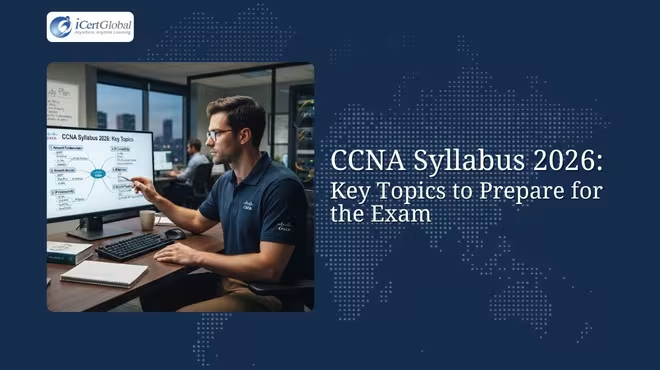
CCNA Syllabus 2026: Key Topics to Prepare for
Discover how the CCNA syllabus helps you develop routing, security, automation, and network management skills. ...
.webp)
Why Cisco CCNA Certification is Essential for Your
Unlock high-paying roles and master networking essentials. Discover why the Cisco CCNA is the ultimate career catalyst for...
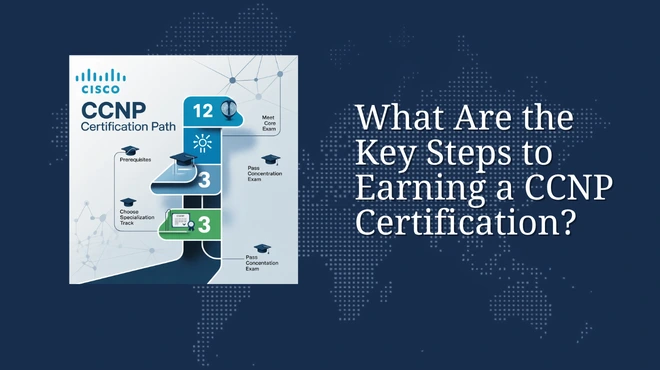
What Are the Key Steps to Earning a
Master the steps to earning your CCNP Certification. Learn about core exams, concentration paths, and study strategies for...
5 Reasons Why CAPM Certification is a Game-Changer
Discover how a CAPM Certification validates your skills, increases your salary potential, and sets you apart in the...
How to Build a Successful Cisco Career Path
Unlock your future in IT. Learn how to build a successful Cisco career path with the right certifications,...
What is Cisco Systems
Understand what Cisco Systems is, its role in networking, and the function of Cisco Routers and Switches. Learn...
CCNA vs CCNP: Which Cisco Certification Is Right
Compare CCNA vs CCNP certifications in 2026. Learn the key differences, prerequisites, exam details, career paths, salary, and...
Essential Key Components of Cisco UCS: An Overview
Explore the key components of Cisco UCS, including UCS Manager, Fabric Interconnects, servers, and chassis, and learn how...
.webp)
Understanding Dynamic Routing Protocols in CCNA Networking
Master Dynamic Routing Protocols in CCNA with this comprehensive guide. Enhance your networking skills, understand key concepts, and...
.webp)
Cisco Nexus Dashboard Enhancing Data Center Operations!
Boost data center efficiency with Cisco Nexus Dashboard. Simplify operations, improve visibility, optimize performance & enhance network management...



