



Capacity Planning Definition Top Methods and Strategies
Master capacity planning, key methodologies, and capacity utilization with this guide built for seasoned professionals focused on smarter
Stop hoping for uptime. Get the credential that proves you can engineer a crash-proof, secure, and optimized IT environment.
You are likely the one they blame when the server crashes. You are the one working weekends because "capacity ran out" unexpectedly. You are fighting a losing battle against unmanaged demand, trying to secure a network that wasn't designed for threats, and praying that the Disaster Recovery plan (which hasn't been tested in two years) actually works. You are an operational victim. PPO-certified professionals are operational architects. While others are just "keeping the lights on," ITIL PPO professionals are analyzing Patterns of Business Activity (PBA), modeling future capacity needs, and designing availability architectures that eliminate single points of failure. Recruiters for high-availability environments (Banking, Telecom, E-commerce) don't want generic managers; they want specialists who understand Capacity Management ITIL processes and can guarantee 99.99% uptime with math, not magic. This isn't a theoretical overview. Our ITIL Planning, Protection, and Optimization course is a technical, process-heavy deep dive. We strip away the management fluff and focus on the "how-to." You will learn how to conduct a Business Impact Analysis (BIA) that justifies your budget requests, how to size infrastructure for peak loads without overspending, and how to bake Information Security into the design rather than bolting it on later. We built this for the serious infrastructure and support leads who are tired of the chaos. Whether you are a Capacity Manager in Columbia, SC or a Security Admin in Gurgaon, this training gives you the structural authority to say "No" to bad risks and "Yes" to stability. You will learn to optimize resources to squeeze every rupee of value out of your assets while protecting the organization from risks it doesn't even see coming.
Fully authorized training that guarantees your credits count toward the ITIL Expert journey.
This is a "Capability" module, meaning it is intense, practical, and focused on execution, giving you 4 credits instead of the standard 3.
We don't just read slides; we simulate capacity breaches and security incidents to test your response strategies.
Learn the actual calculations for reliability (MTBF, MTBSI) and availability that define professional Service Level Management.
Learn how PPO principles apply to modern AWS/Azure environments where "Capacity" is elastic but costs are real.
Stuck on a complex availability calculation during your study? Our experts are on standby to help you crunch the numbers.

Get a custom quote for your organization's training needs.
Stop guessing. You will learn to model business demand, right-size your IT resources (hardware, software, people), and produce a Capacity Plan that the CFO will actually sign off on.
Downtime is a choice. You will master the design of high-availability architectures, understand component failure impact, and learn to calculate and improve service reliability.
Beyond backups. You will learn to align IT recovery with business needs, conduct Business Impact Analysis (BIA), and manage risk to ensure survival during a disaster.
Bake it in. You will learn to integrate security controls into the service design lifecycle, ensuring the Confidentiality, Integrity, and Availability (CIA) of your data.
Control the flow. You will learn to identify Patterns of Business Activity (PBA) and User Profiles to influence demand and prevent infrastructure overload.
See the future. You will learn to identify, assess, and mitigate risks before they manifest as outages or breaches.
If you are responsible for the stability, security, or performance of IT services, this Capability module is your professional standard.
Validate your expertise in the most critical, high-risk areas of IT operations.
Stop being overruled by developers or finance; use PPO data to prove your infrastructure needs.
Unlock roles specifically asking for "Intermediate PPO" or "Capacity Management" expertise in top MNCs.
This is an advanced Capability module. It assumes you are ready to work.
Mandatory Prerequisite: You must hold a valid ITIL Foundation certificate (v3, 2011, or ITIL 4 Foundation). You cannot sit for PPO without it.
Training Requirement: You must complete an accredited training course (like ours) to get the "Candidate Number" required for the exam.
Recommended Experience: We strongly advise candidates to have 2+ years of experience in IT operations, security, or infrastructure to understand the complex scenarios.
It's not just "uptime." Learn to define and measure Reliability (MTBF), Maintainability (MTRS), and Serviceability. Understand how to negotiate realistic availability targets in SLAs.
Don't wait for it to break. Learn Risk Assessment, Component Failure Impact Analysis (CFIA), and Fault Tree Analysis (FTA) to identify single points of failure before they cause an outage.
When it breaks, learn from it. Master the Expanded Incident Lifecycle and Service Failure Analysis (SFA) to ensure the same crash never happens twice.
The foundation of DR. Learn to quantify the financial and operational loss of a disaster over time. This is how you justify the budget for redundancy.
Identify threats (fire, flood, cyber). Develop risk management strategies (Mitigate, Accept, Transfer). specific recovery options from "Do Nothing" to "Hot Standby."
A plan is useless if it doesn't work. Learn to design continuity plans, run realistic tests/drills, and manage the invocation process during a real crisis.
Implement the Information Security Management System (ISMS). Understand the CIA Triad: Confidentiality, Integrity, and Availability.
Learn to design, implement, and enforce security policies. Understand the relationship between the Information Security Manager and the rest of the ITIL processes.
How to detect, report, and manage security breaches. Integrating security into the standard Incident Management workflow.
The ITIL PPO exam questions are long and complex. We teach you how to read a 2-page scenario and extract the critical information needed to answer the question.
The exam uses gradient scoring (5, 3, 1, 0 marks). Learn how to identify the "Most Correct" answer (5 marks) versus the "Partially Correct" answer (3 marks).
A full-length, timed simulation to test your readiness under pressure.
Great class, very informative.

Great PMP<sup>®</sup> Bootcamp. I had a great time taking this course. I took the course to prepare to sit for the CAPM<sup>®</sup> but may be able to sit for the PMP<sup>®</sup>. I learnt a lot was challenging. Great course. We need one more day. Content was very detailed.

it was a great class. Lots of energy. And I enjoyed.

Fantastic course to prepare for PMP<sup>®</sup> exam.

As a participant it was smooth sailing for me.

Trainer was excellent. Shared good resources and good experiences.

Good content and training.
I wanted to let you know that I took and passed the PMP exam. Thanks to iCert Global and especially my Cincinnati course instructor, who was an excellent teacher and helped me immensely.

Trainer was good. Trainer was very engaged and interacting. Very much satisfied with the training.

I was pleasantly surprised at the quality of this training. Yomi was awesome as a trainer and working to make sure that we understood the concepts. Controlling Cost and Controlling Risk are the most complicated, but Yomi spent time after class working through questions to help others understand. This class also helped to change my perception of the PMP being this MONSTER to something that I can I can successfully do.

Great class with a lot of information and tips to prepare for the exam

It was a great course, covered all the things that i ended up hitting road bumps on. I was the only one in the class, but the trainer was just as involved as if it had been a full class.

I was nervous about taking it online versus classroom; but I am actually glad I took it online. Instructor was very great and gave a good learning experience with his relevant project management experience.
The training was very intense but covered with course material. It was more than I expected.

I thought the class was very informative. The instructor did an excellent job breaking down each chapter to where it was easy to understand. I was also very impressed with his commitment to help us pass ever after the class is over.

Excellent training. Instructor was very knowledgeable and explained information in an understandable way
Quality Materials presented, Instructor very knowledgeable. Exceeded my expectations.
The training is a great introduction into the PMI mindset. Very informative and helpful

Stay updated with the latest insights and trends in your field
Master capacity planning, key methodologies, and capacity utilization with this guide built for seasoned professionals focused on smarter
Stay ahead with the top 20 emerging Cybersecurity trends for 2026, from AI-driven attacks to supply chain risks—essential
Master project risk assessment with a clear 5-step process and learn how qualitative vs quantitative methods ensure smarter
10+ year pro? Learn the strategic steps to become a Game Developer, mastering C++, Game Engines, AI, and
Master ARP Spoofing with Python & Scapy: Learn ARP Poisoning Mechanics, Ethical Hacking Defenses, and Enterprise-Grade Mitigation Strategies
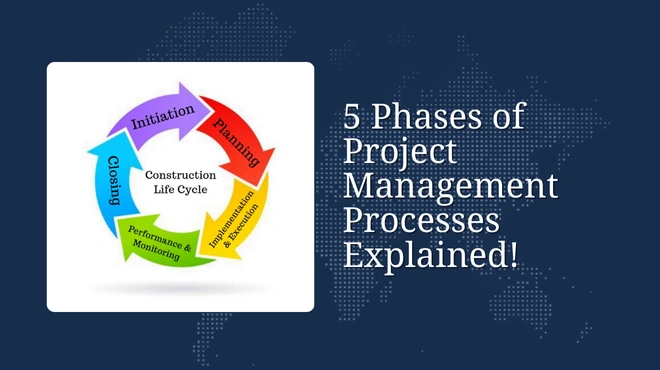
Master the 5 essential Project Management Phases (Initiating, Planning, Executing, M&C, Closing). Advanced processes for 10+ year professionals.

Master artificial intelligence algorithms, from classification to predictive modeling. Expert insights for 10+ year professionals on Machine Learning
Master Data Import in R Commander: Step-by-Step GUI, Manual Entry & Custom R Functions for Efficient, Professional Data
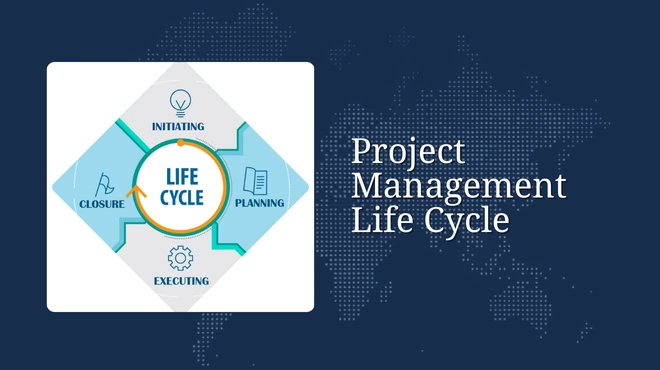
Master the Project Management Life Cycle from initiation to closure. Learn best practices to plan projects and achieve

Explore 10 compelling reasons to choose a career in Big Data Analytics, offering high pay, job stability, and

Our experts are ready to help you with any questions about courses, admissions, or career paths. Get personalized guidance from industry professionals.


"PMI®", "PMBOK®", "PMP®", "CAPM®" and "PMI-ACP®" are registered marks of the Project Management Institute, Inc. | "CSM", "CST" are Registered Trade Marks of The Scrum Alliance, USA. | COBIT® is a trademark of ISACA® registered in the United States and other countries. | CBAP® and IIBA® are registered trademarks of International Institute of Business Analysis™.