





What is the CCNA 200-301 exam fee in
Find the official CCNA exam fee in India for 200-301. Learn registration costs, tax details, and how to
Stop being a generalist. Get the definitive, advanced credential that validates your mastery of the entire AWS automation stack, unlocking the high-stakes SRE and Platform Architect roles.
You're stuck in a loop of manual deployments, broken testing environments, and endless patching cycles. You may be called a DevOps Engineer, but your actual work is 70% firefighting and 30% scripting. Meanwhile, the AWS Certified DevOps Engineer - Professional defines the entire pipeline strategy, automates security and compliance, and commands 35-50% higher compensation because they eliminate the chaos you are currently managing. Your lack of a verifiable, professional-level DevOps Engineer certification is the gatekeeping filter preventing you from moving into strategic SRE and architecture roles. This isn't another generic "introduction to DevOps" course that vaguely covers Git and Docker. Our DevOps Engineer course is designed by active, principal-level SREs and DevOps consultants who have implemented large-scale, automated systems for demanding PondicherryFinTech, E-commerce, and SaaS companies facing millions of transactions daily. They've built this training to teach you not just the tools, but the architecture and process philosophy required to achieve true Continuous Delivery and Operational Excellence. You will move past merely setting up pipelines to designing solutions for business-critical stability and cost control. This means mastering infrastructure as code (IaC) with CloudFormation/Terraform to achieve immutable infrastructure, implementing zero-downtime Blue/Green and Canary deployments, and establishing automated guardrails for security and compliance (DevSecOps). The exam is the professional check - the real value is the ability to walk into any major IT firm in Pondicherry and immediately architect a production-grade CI/CD solution that cuts release time from weeks to hours. We've structured this for the senior working professional who can't afford failure. Intensive evening and weekend live batches are mandatory. You get access to a fully-configured, professional-grade lab environment, advanced deployment templates used in major Pondicherryservices companies, 24/7 expert support, and a hyper-focused methodology to crack the complex DevOps Engineer interview questions and AWS Certified DevOps Engineer - Professional exam.
Focuses exclusively on the complex, integrated knowledge required for the AWS DOP-C02 Professional certification.
Learn deployment, monitoring, and automation strategy directly from certified, battle-tested AWS Professional Engineers.
50+ hours of mandatory, scenario-based labs focusing on multi-region, highly-available pipeline design and troubleshooting.
Deep dives into integrating Source Control (Git), CI/CD Orchestration (CodePipeline/Jenkins), and IaC (CloudFormation/Terraform).
Access to 1200+ complex, multi-choice scenario questions and 10+ full-length mock exams to build professional-grade stamina.
Immediate, authoritative guidance from certified professionals on your toughest IaC, deployment, and troubleshooting challenges.
The ability to develop and refine skills in continuous integration and delivery (CI/CD) pipelines is essential for success in the AWS Certified DevOps Engineer - Professional (DOP-C02) Training Program. Continuous integration tools, such as Jenkins and Travis CI, enable automated code testing and validation. In Pondicherry, professionals can apply these skills to optimize their software development workflows and reduce deployment times. In a CI/CD pipeline, automated testing and validation are crucial to ensure the quality of code changes. Test automation frameworks like Selenium and Appium are used to simulate user interactions and verify the functionality of software applications.
By integrating these frameworks into a CI/CD pipeline, developers can rapidly identify and address defects, thereby improving the overall quality of their software releases. In practice, developing skills in CI/CD pipelines enables professionals to design and implement efficient deployment strategies that meet the needs of their organizations. By leveraging containerization technologies like Docker and Kubernetes, they can package and deploy software applications with greater speed and agility. This, in turn, enables businesses to respond more rapidly to changing market conditions and customer needs. Professionals who complete the AWS Certified DevOps Engineer - Professional (DOP-C02) Training Program gain credibility in their field and are able to demonstrate their expertise in DevOps practices and tools.
They can apply their knowledge and skills to improve the efficiency and effectiveness of software development and deployment processes. This, in turn, enables them to drive business value and improve the quality of software releases. With their enhanced skills and knowledge, professionals can take on more complex and challenging roles within their organizations. They can apply their expertise in areas such as infrastructure as code (IaC) and security best practices to improve the overall security and compliance posture of their organizations. By doing so, they can enhance their professional credibility and contribute to the success of their businesses.

Get a custom quote for your organization's training needs.
The AWS Certified DevOps Engineer - Professional (DOP-C02) Training Program equips professionals with the skills and knowledge needed to work effectively in a DevOps team. They learn to design and implement monitoring and logging strategies that provide real-time visibility into application performance and behavior. In Pondicherry, professionals can apply these skills to improve the overall visibility and control of their software applications.
Professionals in the AWS Certified DevOps Engineer - Professional (DOP-C02) Training Program learn to use tools like Prometheus and Grafana to collect and analyze metrics and logs from their applications. They apply their knowledge of monitoring and logging best practices to identify and resolve performance issues and improve the overall reliability of their applications. By doing so, they can ensure that their applications meet the required service levels and performance standards.
In practice, developing skills in monitoring and logging enables professionals to design and implement incident response strategies that minimize downtime and disruption to their applications. By leveraging tools like Amazon CloudWatch and Amazon CloudTrail, they can quickly identify and respond to incidents, thereby reducing the overall impact on their businesses. This, in turn, enables them to improve the overall quality of service and meet the expectations of their customers.
Master the AWS Code Suite (CodeCommit, CodeBuild, CodePipeline, CodeDeploy) to design automated, auditable, and resilient multi-stage delivery systems.
Learn to implement Infrastructure as Code (IaC) with CloudFormation for predictable, repeatable deployments, eliminating configuration drift and manual errors.
Design and implement cross-region and multi-AZ deployments for fault tolerance, using Auto Scaling groups with advanced healing and rollback policies.
Implement automated security controls using IAM Roles, Federation (SAML/Cognito), and encryption to protect data in transit and at rest across all AWS services.
Master the configuration of Highly Available (HA) and Scalable databases using Amazon RDS (Multi-AZ, Read Replicas) and architecting with DynamoDB.
Implement and enforce IT governance policies using AWS Config, CloudTrail, and CloudWatch to ensure continuous compliance and monitor performance.
If your role requires you to design, deploy, and manage highly resilient, compliant, and automated AWS solutions at scale, and you have 2+ years of hands-on experience with AWS environments, this program is your mandatory path to strategic recognition.
Professionals enrolled in the AWS Certified DevOps Engineer - Professional (DOP-C02) Training Program work on real-world projects that involve designing and implementing DevOps practices and tools. They apply their knowledge and skills to improve the efficiency and effectiveness of software development and deployment processes. In Pondicherry, professionals can work on projects that involve improving the overall quality of software releases and reducing deployment times.
Professionals in the program learn to use tools like AWS CodePipeline and AWS CodeBuild to automate code testing and validation. They apply their knowledge of continuous integration and delivery best practices to improve the overall quality of their software releases and reduce deployment times. By doing so, they can improve the overall efficiency and effectiveness of their software development workflows.
In practice, working on real-world projects enables professionals to apply their knowledge and skills in a practical and meaningful way. They can develop and refine their skills in areas such as continuous integration and delivery, monitoring and logging, and incident response. By doing so, they can improve their professional competence and contribute to the success of their organizations.


Stop getting filtered out for senior SRE and Platform Architect roles that explicitly demand this level of certified expertise.
Unlock the highest salary bands reserved for engineers who can confidently automate and manage business-critical, multi-million dollar AWS workloads.
Validate complex, integrated skills across the entire software development lifecycle (SDLC) on AWS, proving your strategic value over tactical knowledge.
The DOP-C02 is an expert-level exam. AWS sets a clear benchmark to ensure every certified professional has a proven track record.
Recommended Experience: 2 or more years of experience provisioning, operating, and managing AWS environments, including deep experience with continuous delivery and IaC.
Associate Certification (Recommended): While not mandatory, holding the AWS Certified Developer Associate or SysOps Administrator Associate is strongly advised.
The reality: If you cannot confidently use CloudFormation, design a multi-AZ VPC, or secure an S3 bucket with IAM policies without looking it up, this exam will crush you. This program provides the necessary depth to meet these prerequisites.
The AWS Certified DevOps Engineer - Professional (DOP-C02) Training Program provides professionals with opportunities for growth and advancement in their careers. They can apply their knowledge and skills to take on more complex and challenging roles within their organizations. In Pondicherry, professionals can apply their expertise in DevOps practices and tools to improve the overall quality of software releases and reduce deployment times.
Professionals in the program learn to use tools like AWS CodeCommit and AWS CodeReview to manage code changes and improve code quality. They apply their knowledge of version control best practices to improve the overall quality of their software releases and reduce errors. By doing so, they can improve their professional competence and contribute to the success of their organizations.
In practice, developing skills in DevOps practices and tools enables professionals to drive business value and improve the overall quality of software releases. By applying their knowledge and skills in areas such as continuous integration and delivery, monitoring and logging, and incident response, they can improve the overall efficiency and effectiveness of their software development workflows. This, in turn, enables them to advance in their careers and take on more senior roles.
Mastering YAML/JSON templates, Intrinsic Functions, Parameters, Mappings, and Outputs. Implementing complex logic with Conditions and Pseudo Parameters.
Mastering Nested Stacks for modularity, utilizing Custom Resources for unsupported services, and advanced use of DependsOn for resource ordering.
Systematic approach to troubleshooting failed stacks (Rollback failure, drift detection). Implementing best practices for template security and reusability across accounts.
Working with Docker images and registries (ECR). Deploying and managing containerized applications using ECS Fargate/EC2 launch types.
Mastering Elastic Beanstalk environments for simple, repeatable application deployment. Configuring environments, application versions, and health checks.
Replacing old tools (OpsWorks) with modern services like AWS Systems Manager (SSM) for patch management, configuration drift correction, and run command automation.
Understanding the difference between elasticity and scalability. Implementing disposable resources and architecting with services instead of stateful servers.
Mastering Auto Scaling Group (ASG) lifecycle hooks for pre- and post-instance actions. Creating and testing self-healing ASGs that automatically replace failed instances.
Designing highly available architectures using Multi-AZ deployments, Cross-Region Replication, and Global Services (Route 53, Global Accelerator).
Mastering Amazon RDS (Multi-AZ, Read Replicas) for relational databases. Understanding and leveraging Amazon Aurora for performance and resilience.
Getting started with DynamoDB. Mastering Provisioned Throughput, Global Tables, and Secondary Indexes for highly scalable NoSQL applications.
Deep-dive into IAM Roles and Policies. Implementing Cross-Account Access for resource delegation, and utilizing SAML and Cognito for corporate and web identity federation.
The AWS Certified DevOps Engineer - Professional (DOP-C02) Training Program identifies skills gaps in areas such as continuous integration and delivery, monitoring and logging, and incident response. Professionals learn to use tools like AWS CodePipeline and AWS CodeBuild to automate code testing and validation. In Pondicherry, professionals can apply their knowledge and skills to improve the overall quality of software releases and reduce deployment times.
Professionals in the program learn to use tools like Prometheus and Grafana to collect and analyze metrics and logs from their applications. They apply their knowledge of monitoring and logging best practices to identify and resolve performance issues and improve the overall reliability of their applications. By doing so, they can ensure that their applications meet the required service levels and performance standards.
In practice, identifying skills gaps enables professionals to develop and refine their skills in areas such as continuous integration and delivery, monitoring and logging, and incident response. They can apply their knowledge and skills to improve the overall efficiency and effectiveness of their software development workflows. By doing so, they can improve their professional competence and contribute to the success of their organizations.
I have had the opportunity to connect with the sales team from iCert Global regarding ITIL certification course. Must say, I was extremely impressed on the entire journey and experience. I dealt with some of the best professionals.

A professional approach towards career development. Friendly and accommodative co-ordinators that understand and then help you with the requirements. Overall, I had a very pleasant training experience. Thank you, iCert Global.

My experience with iCert Global for ITIL Expert and PRINCE2® program was wonderful! I had direct contact with my trainer. Good environment and very helpful co-ordinators. I am looking forward for more training courses. Thank you!

iCert Global had been truly professional in their dealings and the training instilled a lot of confidence in me to take PMP<sup>®</sup> exam. The content of the course was detailed and the trainer related concepts with real-life examples.

At a high Level, it was a good learning experience. Looking forward to the next level of Implementation course.

The training has been very helpful in clearing my queries on cloud and giving me a detailed information on the upcoming technology

Excellent course and excellent faculty. The course is done and executed very clearly<br/><br/>

This training is worth & helped me to understand more on ITIL best practice. Hope this will help me to improve my career. Thanks
Training was really useful to understand the foundation of ITIL concepts and was able to relate the concepts to the real life.
Excellent course material and faculty skill level helped me to write ITIL 2011 foundation exam with full confidence.
Training was good, elaborations are very good and the case study shared was also very good.<br/><br/>
The course content & coverage is good. The explanation by faculty is very good.<br/><br/>
Training was well organized and helped in understanding the contents very well. The trainer was very knowledgeable and shared real life scenarios.
It was very good and the trainer was providing real world examples to explain the concepts so where we able to understand the concepts very easily. Thanks iCert Global.
Real-time scenarios and integrating with course content helped a lot in understanding the concept. Topics were discussed in Depth, Coverage and Attention to detail.
It was a very nice experience with iCert Global. The faculty was very much experienced and well aware of the upcoming changes to PMP<sup>®</sup>. The class was not only about knowing the stuff but also was very much exam oriented.

Thanks to iCert Global people who have supported in providing good material and also like to thanks to our Mentor for his excellent guidance in completing the PMP<sup>®</sup> Certification. <br/><br/>

iCert Global has the best team, very professional and knowledgeable. Trainer has focused on core concepts and guided in all aspects that include, understanding my current role, filling the application and best way for preparation.

Stay updated with the latest insights and trends in your field
Find the official CCNA exam fee in India for 200-301. Learn registration costs, tax details, and how to
Earned your PMP certificate? Discover the next advanced credentials to accelerate your career, master specialized skills, and boost
Plan your career investment. Discover the exact PMP certificate fee, PMI membership discounts, and exam prep costs to

Discover how long it takes to become PMP certified. We analyzed data from 500+ learners to help you
Uncover the real PMP pass rate with our 2026 learner data. Discover key exam insights to help you
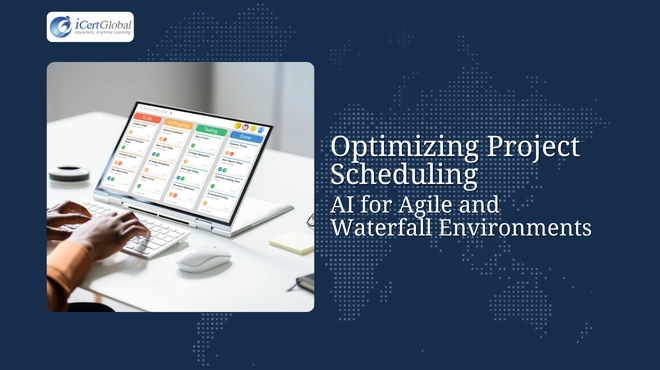
Master project scheduling AI for Agile and Waterfall frameworks to boost your career. Learn how to optimize your

Learn what data science for beginners course is, the essential skills, tools, career opportunities, certifications, and a roadmap

Launch your data science career. Master high-demand skills, build a job-ready portfolio, and navigate your path to certification
.webp)
Master Python Data Science Libraries to boost your career. Learn to simplify data analysis, build AI models, and

Build in-demand analytics skills. Learn Python for data science to master key libraries, pass industry certifications, and accelerate

Our experts are ready to help you with any questions about courses, admissions, or career paths. Get personalized guidance from industry professionals.
Request a Call Back

"PMI®", "PMBOK®", "PMP®", "CAPM®" and "PMI-ACP®" are registered marks of the Project Management Institute, Inc. | "CSM", "CST" are Registered Trade Marks of The Scrum Alliance, USA. | COBIT® is a trademark of ISACA® registered in the United States and other countries.
