
|
⚡ QUICK ANSWER A Guide to the Project Management Body of Knowledge (PMBOK Guide) introduces practical, AI-driven, and flexible project management practices designed for modern business environments. Compared to PMBOK 7, it focuses more on real-world execution, Agile and hybrid methodologies, risk management, stakeholder collaboration, and business value delivery. It also helps project managers develop critical skills required for modern projects and the PMP exam. |
PMBOK Guide 8th Edition vs 7th Edition: Major Changes Every Project Manager Must Know
The PMBOK Guide 8th Edition was released by the PMI in digital format on November 13, 2025, followed by the paperback edition on January 13, 2026. This latest edition was released to resolve the issues that project managers face while planning, executing, and managing projects in today’s AI-driven era.
Unlike the earlier versions of the PMBOK that focused on the “how” of managing projects, the PMBOK 8th edition focuses on why tasks are performed, what drives a project’s success, and how project management tools are used.
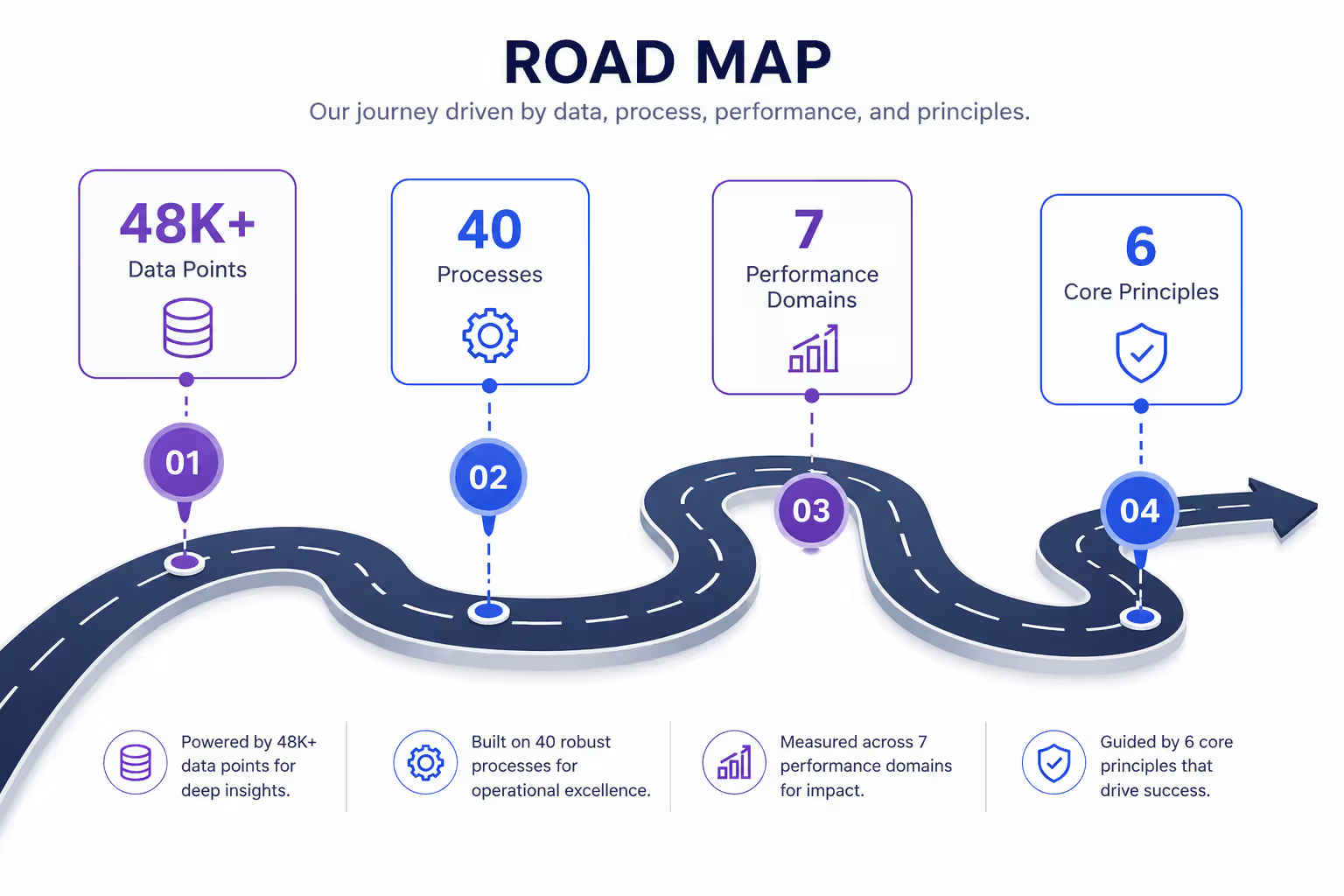
This update is backed by practitioner feedback, 48000 + data points collected, and expert interviews. Project managers will no longer have to memorize theoretical procedures; instead, they can apply an actionable project management framework.
This framework equips project managers with the know-how to adopt digital tools, AI, and sustainable practices. Project managers can now handle risks effectively, make smart decisions, and handle uncertainty confidently.
PMBOK 7th vs 8th Edition
|
Basis of Comparison |
PMBOK 7 |
PMBOK 8 |
|
Main Focus |
Focused more on project management principles |
Focuses on practical project execution and real-world application |
|
Style |
More theory and concept-based |
More practical and action-oriented |
|
Principles |
Includes 12 principles |
Simplified into 6 practical principles |
|
Performance Domains |
8 Performance Domains |
7 Performance Domains |
|
Guidance for Project Managers |
Flexible but less detailed |
Provides clearer guidance, tools, and techniques |
New Updates in PMBOK 8
Modern projects involve multiple stakeholders, remote teams, digital collaboration tools (Jira, Slack), along with a mix of delivery approaches ( Agile and traditional). This often gives rise to collaboration and communication challenges.
The PMBOK Guide 8th edition equips project managers with tools, actionable guidance, and techniques they can tailor according to the project’s complexity, requirements, and size. It enables project managers to deliver outcomes that align with business and stakeholder requirements. Most importantly, it helps project managers to work smoothly across all 3 project environments: predictive, hybrid, and Agile.
- Five Focus Areas
The PMBOK 6th edition’s five process groups have been reintroduced in PMBOK 8 under the heading ‘Focus Areas.’ Focus areas cover five phases of project management, including initiating, executing, monitoring, planning, and closing. These phases are flexible and adaptable - this makes them suitable for Agile, hybrid, and predictive methodologies.

- Clear Principles
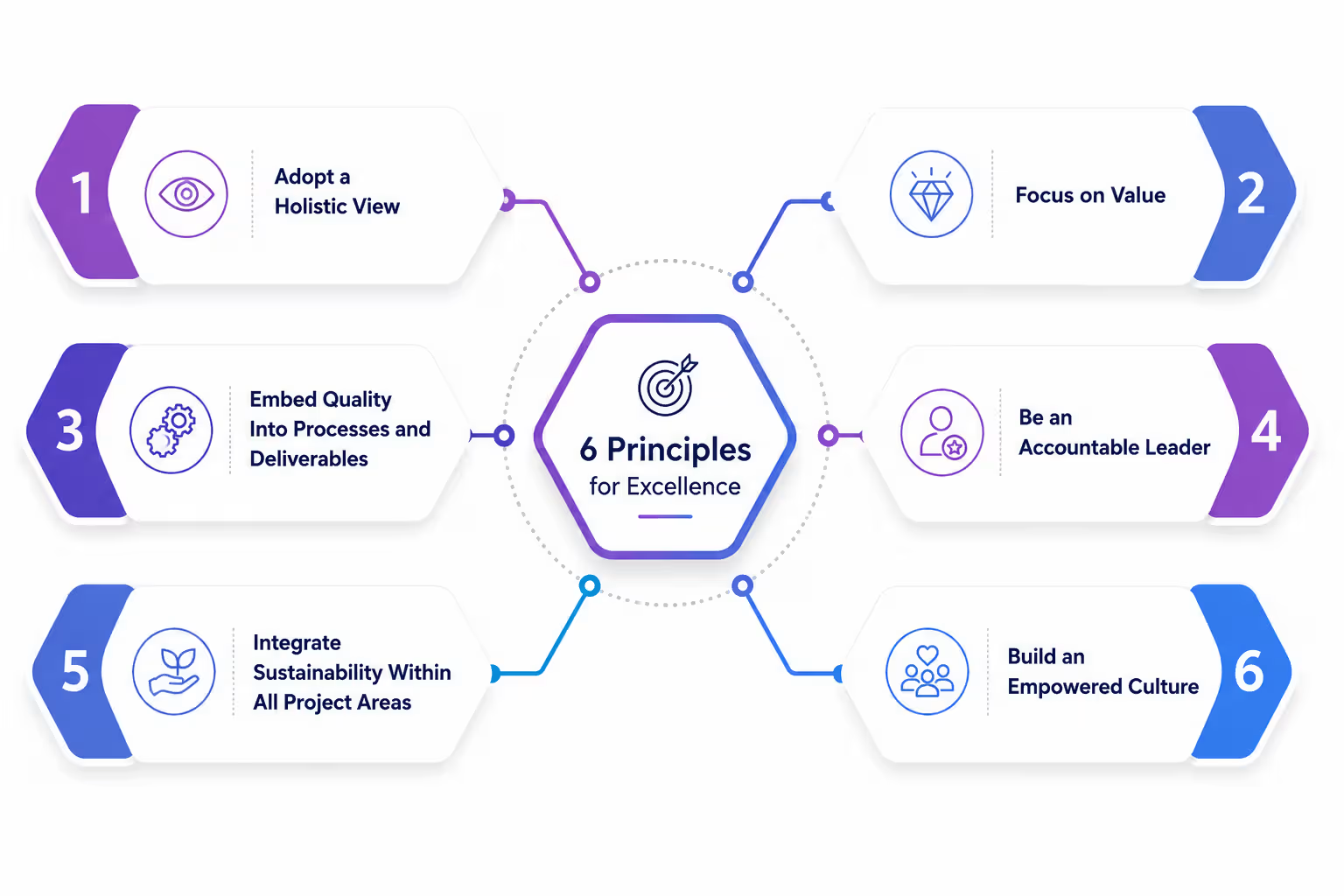
The latest version places importance on practical, actionable, and simplified principles over abstract ideas. The new edition includes 6 principles, reduced from the twelve principles in the previous version. Project Managers can apply these principles to their projects directly - it guides them on how to lead teams, think critically, and make decisions.
- Modern Topics
The 8th edition of PMBOK has been drafted from the perspective of modern project managers who find it difficult to navigate technology-driven changes. It integrates emerging trends like AI with project management practices
Artificial Intelligence: It emphasizes how AI can be leveraged for planning, identifying risks, and predicting outcomes.
Procurement Practices: It helps project teams understand how resources are procured, along with compliance frameworks.
Project Management Offices: A PMO’s main objective is to ensure the project is being carried out in alignment with the organization’s ethics.
Sustainability: The goal is to ensure the project is being carried out with the help of environmentally friendly practices.
- Seven Performance Domains
PMBOK 8 has replaced the traditional Knowledge Areas with seven performance domains that cover all areas of project management. It eliminates ‘prescriptive ideas’ and outlines 40 practical ideas that can be implemented to handle projects

How PMBOK Supports Three Key Project Management Methodologies
- Waterfall Approach
The waterfall approach is ideal for construction, manufacturing, or infrastructure-based projects, as the requirements are fixed. It highlights a traditional way of managing projects where scope, budget, and schedule are predefined.
PMBOK 8 supports Waterfall projects with the help of five Focus Areas. Projects are planned at the beginning, and project tasks move through initiation, planning, execution, monitoring, and closing phases.
- Agile Approach
Agile is a flexible approach where work is carried out and delivered in short cycles known as ‘sprints.’ The focus is to gather feedback from stakeholders and tailor project management practices to meet evolving stakeholder requirements. Instead of completing tasks sequentially, value is delivered incrementally (small steps).
It’s suitable for software development teams where collaboration, stakeholder engagement, and adaptability play a major role.
The PMBOK latest edition fosters a culture of continuous learning, collaboration, and coordination through the 6 project management principles. The inclusion of 7 performance domains, including governance, scope, stakeholder, resources, risk, finance, and schedule, equips Agile teams with the tools required to identify risks early, respond to changes quickly, and monitor performance.
- Hybrid Approach
Hybrid project management encourages project managers to apply both adaptive (Agile) and predictive (traditional) approaches to carry out a project. For example, in a technology-based project, tasks like hardware procurement can be carried out through a sequential and predictive process. Whereas software development tasks can be handled with the help of flexible Ag/ile practices as requirements evolve through testing and feedback.
As per PMBOK guidelines, project managers have the autonomy to tailor techniques, tools, and frameworks as per the project’s complexity level, stakeholder requirements, and industry requirements.
Learn more about PMBOK in project management.
Why is PMBOK 8th Edition Important for Project Managers?
- Deliver Business Value
While older versions required project managers to deliver projects within the specified budget and timeline, PMBOK 8 encourages them to deliver value. Project managers should ensure that the project outcomes delivered are in alignment with customer expectations and organizational goals.
- Modern Project Environments
Modern projects require more than rigid methodologies as teams today are working across diverse locations, technologies are evolving quickly, and customer requirements are changing every day. PMBOK’s latest edition allows project managers to address modern issues through flexible and realistic practices.
- Manage Uncertainty and Changes
Projects often encounter unexpected risks, challenges, and changing requirements. A thorough understanding of PMBOK 8 helps project managers think critically, identify risks, and develop flexible strategies to respond to uncertainty.
- Use of AI and Emerging Technologies
PMBOK 8 highlights why the use of modern tools is integral for project management. It equips project managers with the knowledge required to deploy data-driven systems, AI tools, and automation techniques in project execution.
- Promotes Flexible Project Management Practices
The latest edition emphasizes there’s no one-size-fits-all approach to project management. Rather, it equips teams to customize processes, methodologies, and tools according to the project’s complexity, stakeholder needs, industry, and project size.
Conclusion
The PMBOK 8th edition serves as a foundation and knowledge base for aspiring project management professionals. By gathering feedback from project experts, PMI has successfully included focus areas, 40 processes, and the ITTO methodology.
It also helps project managers acquire in-depth knowledge of emerging trends like digital transformation, sustainability, and AI. Planning to appear for the upcoming PMP exam? Explore our PMP certification courses designed with a curriculum aligned to the latest PMBOK Guide and current PMI exam standards.





Write a Comment
Your email address will not be published. Required fields are marked (*)