
You've mastered the silos—Strategy, Design, Transition, Operation, and Continual Service Improvement. But in the real world, these silos leak, processes clash, and value disappears in the handoff. You're an expert in one area, but you lack the connective tissue to lead the whole system. The ITIL MALC Certification is the definitive proof that you understand how these five stages must interact, align, and be governed from a strategic perspective. This course is designed to eliminate the fatal flaw of the Intermediate track: deep knowledge in isolation. Managing Across the Lifecycle forces you to think like an ITIL Expert Exam candidate, evaluating scenarios where a decision in Service Design has a critical, cascading impact on Service Operation - and vice versa. This is not rote memorization; it's the ultimate test of your strategic judgment. The ITIL Expert status, earned by passing the MALC, is the non-negotiable credential for senior IT Service Management (ITSM) roles in Dubai and globally. Without it, you are filtered out as a tactical manager. With it, you gain the vocabulary and governance framework to lead large, multi-disciplinary teams and drive transformational change that delivers tangible business ROI. This is the ITIL Strategic Integration required to sit at the decision table. We built this for professionals who refuse to settle for intermediate status. The training is a high-intensity synthesis of your previous learning, focusing solely on the interfaces, communications, and measurements that bind the Service Lifecycle together. Be prepared for rigorous case study analysis - this is where your ITIL knowledge finally translates into actionable business intelligence.
ITIL MALC Certification Overview in Dubai
ITIL MALC Training Course Highlights in Dubai
More Than a Course - It's Your Career Accelerator
Final ITIL Expert Component
Passing the ITIL MALC Certification is the final mandatory step before receiving the ITIL Expert Exam designation.
Complex Scenario Mastery
Training is focused exclusively on the case study format, which tests strategic judgment across all lifecycle stages.
Graded Multiple Choice
Learn to maximize your score on the unique 5/3/1/0 point system used in the MALC and Intermediate exams.
ITIL Strategic Integration Focus
Deep dive into how Governance, Measurement, and Implementation bind the five lifecycle stages into a value-driven system.
Highest Credit Value
Earns 5 mandatory credits towards your ITIL Expert Exam status, completing your required 17-credit total.
prerequisite Validation
We provide rigorous support to ensure your ITIL MALC prerequisites are met and documented correctly before you enroll.
Upcoming Schedule
Why get ITIL MALC-certified?
The Credential That Ends the Gatekeeping
Stop being a process owner.
The ITIL MALC Certification immediately elevates you to the status of an ITIL Expert, proving holistic strategic competence.
Unlock C-Level Conversations.
Gain the credibility to discuss and influence strategic IT decisions across the entire organization, not just within a single process silo.
Gain 5 Essential Credits.
Earn the final, required credits for the ITIL Expert Exam title, a non-negotiable requirement for senior ITSM leadership roles globally.
Who This Program Is For
This certification training is ideal for:
ITIL Intermediate Certification holders with 15+ credits
Aspiring ITIL Expert Exam candidates
Senior IT Managers, IT Directors, and Service Delivery Managers
ITSM Consultants and Chief Information Officers (CIOs)
Professionals responsible for ITIL Strategic Integration and governance
Individuals who have mastered multiple Intermediate modules but lack the final, holistic view
If you meet the ITIL MALC prerequisites and aim for the highest strategic roles in ITSM, this is the final, essential hurdle.
Growth
ITIL MALC certification is a key driver of growth and development in the IT service management industry. This certification enables professionals to develop and maintain a service portfolio that is aligned with business objectives. ITIL MALC certified professionals can create new services, improve existing ones, and modify services to meet evolving business needs. A key aspect of ITIL MALC is the concept of continuous improvement.
This involves analyzing business needs to identify areas for improvement and developing solutions to meet these needs. ITIL MALC professionals can develop and implement strategic plans for service improvement, including service transition, change management, and service operation. They must have a deep understanding of service management frameworks, including the ITIL service lifecycle. In Dubai's fast-paced business environment, having an ITIL MALC certification can lead to career advancement opportunities.
ITIL MALC certified professionals can assume leadership roles in guiding organizations to adopt ITIL best practices. This enables them to drive business growth, improve customer satisfaction, and reduce costs, ultimately positioning their organizations for success in the region.
Eligibility and prerequisites for ITIL MALC Certification
The ITIL MALC Certification is the final component of the ITIL Intermediate stream and is strictly regulated. You must meet all the following ITIL MALC prerequisites to be eligible for the exam:
ITIL Foundation: You must hold the ITIL Foundation Certificate.
Intermediate Credits: You must have successfully completed and passed ITIL Intermediate modules, accumulating a minimum of 15 credits from the Lifecycle and/or Capability streams.
Required Training: Completion of an accredited Managing Across the Lifecycle training course is mandatory before sitting the exam.
Practical Application
ITIL MALC certification is not just about theoretical knowledge; it is about practical application in the real world. This certification requires professionals to develop and maintain a service portfolio that is aligned with business objectives. ITIL MALC certified professionals can create new services, improve existing ones, and modify services to meet evolving business needs. One key aspect of ITIL MALC is the concept of service transition.
This involves analyzing business needs to identify areas for improvement and developing solutions to meet these needs. ITIL MALC professionals can develop and implement strategies for managing and improving services, including service transition, change management, and service operation. They must have a deep understanding of service management frameworks, including the ITIL service lifecycle. In Dubai's business landscape, ITIL MALC certified professionals can apply their knowledge and skills to drive business growth and improvement.
They can develop and maintain a service portfolio that is aligned with business objectives, driving customer satisfaction and reducing costs. This enables organizations to respond effectively to changes in the market and stay competitive in the region.
Skills You Will Gain In Our ITIL MALC Program
Governance and Strategy
Learn how to apply governance structures to the entire Service Lifecycle, ensuring compliance and aligning service strategy with business goals.
Cross-Lifecycle Integration
Master the interfaces between all five stages, resolving conflicts and ensuring seamless process flow (e.g., Change Management bridging Transition and Operation).
Communication and Stakeholder Management
Develop strategies for effective communication across silos and managing the competing interests of diverse stakeholders (Business vs. IT).
Measurement and Metrics
Understand how to define, measure, and report metrics that span the entire lifecycle, providing genuine insight into end-to-end service value.
Organizational Change Enablement
Acquire the methods for driving and sustaining organizational change required to successfully implement and improve ITSM processes.
Continual Service Improvement (CSI) Leadership
Learn how to integrate the CSI approach across all lifecycle stages, making improvement a non-stop management mandate.
Course Modules & Curriculum
Strategic Alignment & Governance
Lesson 1: Key Concepts of the Service Lifecycle
Synthesize the purpose, objectives, and value of all five lifecycle stages and the role of governance (COBIT, ISO 20000) in Managing Across the Lifecycle.
Lesson 2: Governance and Organizational Structure
Examine how governance, decision rights, and organizational design must be aligned to support end-to-end service management and strategic objectives.
Lesson 3: Communication and Stakeholder Management
Master the techniques for communicating value and managing conflicts of interest across different lifecycle stages and various stakeholders (internal/external).
Integrating Service Management Processes
Lesson 1: Integrating Processes Across the Lifecycle
Deep dive into the interfaces of critical processes (e.g., Change, Release, Service Level Management) and how their conflicts are resolved via ITIL Strategic Integration.
Lesson 2: Managing Services Across the Lifecycle
Analyze service portfolio management, service catalog management, and the overall management of the service pipeline across all five stages.
Lesson 3: Value and Measurement
Define how value is achieved and measured throughout the lifecycle, focusing on linking Service Strategy goals to Service Operation metrics.
Organizational Change & Improvement
Lesson 1: Continual Service Improvement (CSI)
Master the role of CSI in integrating and driving improvement activities across all lifecycle stages, utilizing the 7-step process.
Lesson 2: Organizational Change Management
Understand the human and cultural challenges of implementing ITSM change, and how to use communication and motivation to achieve buy-in.
Lesson 3: Risk Management
Review risk identification, analysis, and management across the lifecycle, particularly focusing on how risks transition between stages.
Critical Success Factors and Challenges
Lesson 1: Critical Success Factors (CSFs) and Risks
Analyze the key CSFs for each lifecycle stage and the common risks and pitfalls encountered during the transition and operation phases in a large organization.
Lesson 2: Service Provider Types and Sourcing
Examine how the service lifecycle applies differently to internal, external, and shared service organizations, a common subject of the ITIL MALC case study.
Lesson 3: Challenges, CSFs, and Risks in Implementation
Synthesis of the common implementation challenges (vendor management, resource constraints) and strategies to overcome them.
Exam Strategy and Final Synthesis
Lesson 1: ITIL MALC case study Dissection
Intensive review of the provided case study, identifying strategic gaps, pain points, and critical areas for improvement that will feature in the exam.
Lesson 2: Conquering the 5/3/1/0 Scoring System
Specific, focused training on identifying the 'best' answer (5 points) and eliminating the 'distractor' (0 points) on the ITIL Capstone Exam.
Lesson 3: Final Passing ITIL MALC Strategy
Final mock exam execution, time management drills, and self-assessment against the ITIL MALC exam difficulty benchmarks to ensure readiness.
Career Relevance
In the IT service management industry, ITIL MALC certification is highly regarded as a mark of excellence in managing service transitions, changes, and service operations. This certification demonstrates to stakeholders that an individual can seamlessly integrate ITIL best practices into their organization. ITIL MALC certified professionals can effectively manage service lifecycle stages, ensuring that services align with business objectives and are delivered within agreed-upon time frames. A key aspect of ITIL MALC is the concept of integration and alignment.
This involves analyzing business needs to identify gaps in service offerings and developing solutions to meet these needs. For instance, ITIL MALC professionals can identify areas where new services can be created, improved, or modified to meet evolving business requirements. In order to achieve this integration, they must have a deep understanding of processes, functions, and roles within the service management framework. In Dubai's dynamic business environment, having an ITIL MALC certification can open up new career opportunities.
ITIL MALC certified professionals can assume leadership roles in guiding organizations to adopt ITIL best practices. This enables them to improve service quality, decrease costs, and enhance customer satisfaction, ultimately positioning their organizations for success in the region. _
Skill Gap
The ITIL MALC certification training program is designed to bridge the knowledge gap between service management best practices and real-world implementation. Many organizations face challenges in implementing ITIL best practices, particularly in integrating processes and aligning them with business objectives. ITIL MALC certified professionals have the necessary knowledge to develop and maintain a service portfolio, ensuring alignment with business goals and objectives. One key skill gap addressed by ITIL MALC is the ability to manage end-to-end services across the service lifecycle.
This requires a comprehensive understanding of processes, functions, and roles within the service management framework. ITIL MALC professionals can develop and implement strategies for managing and improving services, including service transition, change management, and service operation. They must have a deep understanding of service management frameworks, including the ITIL service lifecycle. In Dubai's service-oriented economy, ITIL MALC certified professionals can fill the skill gap in service management.
By developing and maintaining a service portfolio, they can drive business growth, improve customer satisfaction, and reduce costs. This enables organizations to respond effectively to changes in the market and stay competitive in the region. _
Customer Testimonials
Hear from our successful graduates
"Trainer was excellent. Shared good resources and good experiences. "

Khemoni Holmes
"As a participant it was smooth sailing for me."

Eric S. Tumlinson
"Fantastic course to prepare for PMP<sup>®</sup> exam."

Kevin Hambrice
"it was a great class. Lots of energy. And I enjoyed. "

John Denke
"Great PMP<sup>®</sup> Bootcamp. I had a great time taking this course. I took the course to prepare to sit for the CAPM<sup>®</sup> but may be able to sit for the PMP<sup>®</sup>. I learnt a lot was challenging. Great course. We need one more day. Content was very detailed. "

Karle Scroggins
"Great class, very informative."

James Conklin
Corporate Training
Tailored programs for teams with enterprise support

Ready to transform your team?
Get a custom quote for your organization's training needs.
Course & Support
Everything you need to know about our training options and support
Skill Development
ITIL MALC certification requires professionals to develop a wide range of skills, including process and function knowledge, service management frameworks, and service lifecycle management. This certification enables professionals to develop and maintain a service portfolio that is aligned with business objectives. ITIL MALC certified professionals can create new services, improve existing ones, and modify services to meet evolving business needs. A key aspect of ITIL MALC is the concept of service management.
This involves analyzing business needs to identify areas for improvement and developing solutions to meet these needs. ITIL MALC professionals can develop and implement strategic plans for service improvement, including service transition, change management, and service operation. They must have a deep understanding of service management frameworks, including the ITIL service lifecycle. In Dubai's dynamic business environment, ITIL MALC certified professionals can develop new skills and competencies.
They can apply their knowledge and skills to drive business growth and improvement, developing and maintaining a service portfolio that is aligned with business objectives. This enables organizations to respond effectively to changes in the market and stay competitive in the region.
Build In-Demand Skills
Explore our instructor-led ITIL MALC training to learn about the course duration, cost, eligibility, and certification process. You get practical learning, exam-focused preparation, and expert guidance. Ready to get started? Compare ITIL MALC certification training options and choose a classroom or live online format that fits your schedule.
ITIL MALC Training in Other Cities
Our ITIL MALC certification training is available in major cities worldwide
Related Blogs
Stay updated with the latest insights and trends in your field
ITIL 4 Foundation vs Practitioner: Certification Path Explained
Compare ITIL 4 Foundation vs Practitioner. Discover which certification aligns with your career goals, boosts your salary, and proves your IT service skills.
Top 10 IT Service Management Best Practices for
Explore the top 10 IT service management best practices for modern business, from ITIL 5 and AI automation to incident, change and problem management.
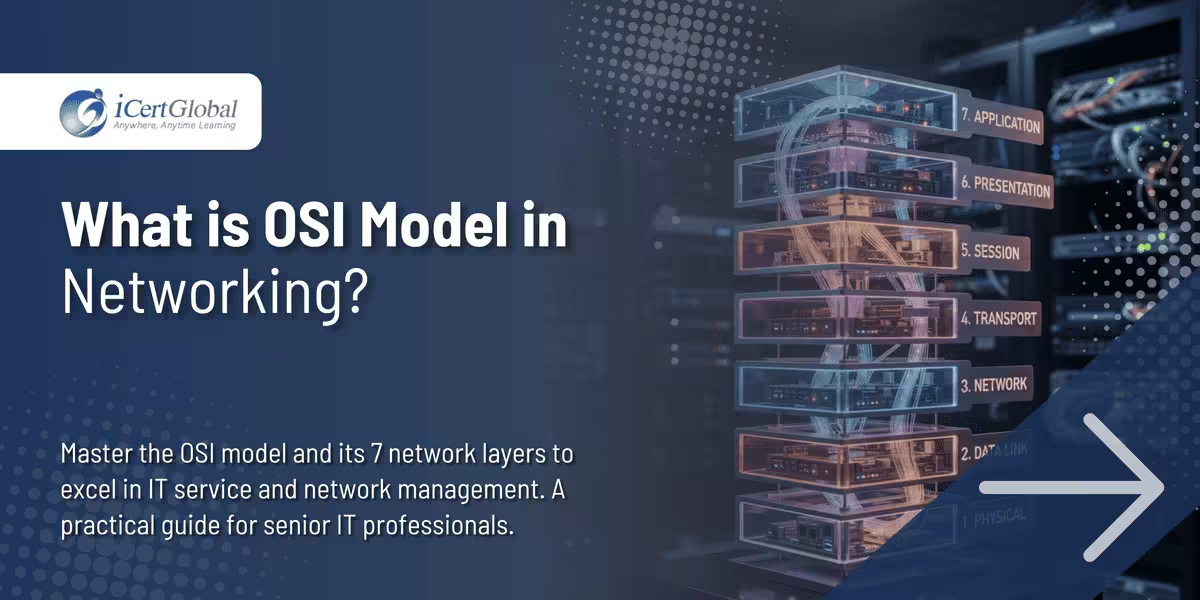
What is OSI Model in Networking
What is OSI model in networking? Learn the 7 layers, protocols, devices, how data flows, and how OSI differs from TCP/IP, with simple examples.
7 Strong Advantages of ITIL Certification
Learn the top benefits of ITIL certification and how it boosts your IT career and organizational value.
Ensuring Tech Support Functions in Businesses
Learn how businesses keep their technology like computers and internet running well with ITSM and ITIL.
The Importance of COBIT in IT Management
Learn what COBIT is and why it matters for managing technology in businesses.
Guide to the Service Desk Manager Role
Learn about the key responsibilities, skills, and career path of a Service Desk Manager.
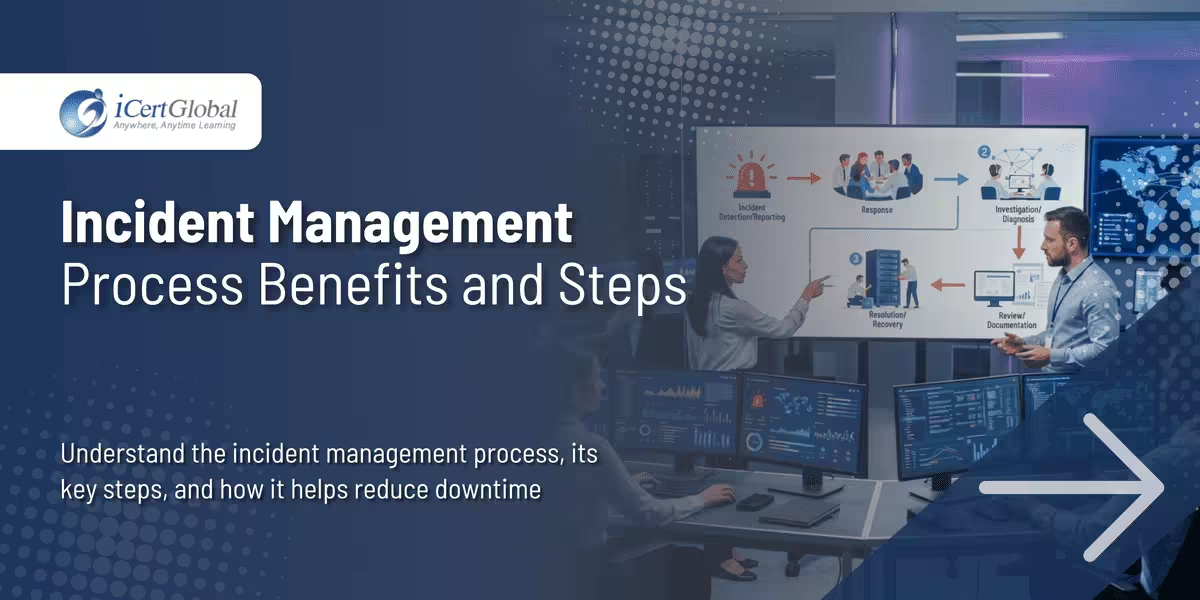
Incident Management Process Benefits and Steps
Master the incident management process to reduce downtime. Learn key steps, roles, and benefits to restore IT services faster and boost reliability.

Top Highest-Paying Programming Languages to Learn in 2026
Explore the top high-paying programming languages for 2026 and gain in-demand skills to boost your career, stay competitive, & maximize your potential in tech.

Top 5 Frontend Frameworks to Watch in 2026
Master frontend frameworks to accelerate your career. Compare React, Angular, Vue, Svelte, and Next.js to build modern web applications.
Data Science for IT Process Management and Optimization
Data Science in IT Process Management enables IT teams to streamline ITSM workflows, lower MTTR, improve SLA compliance, and drive operational efficiency.
The Crucial Role of Change Management in ITSM
Learn how change management enhances IT service management by ensuring smooth transitions. Start optimizing your ITSM processes for better efficiency & success.


