
Your ITIL Practitioner Isn't a Certificate. It's Your Non-Negotiable Pass to Senior Roles You already have your Foundation certificate. Great. So does everyone else. But you're still stuck in the trenches, watching your team drown in incidents, fighting with change advisory boards that say "no" to everything, and dealing with processes that look good on paper but fail in reality. You know the what of ITIL, but you're struggling with the how. That's why you're still a "Service Desk Lead" while others are becoming "Service Delivery Managers" with 40% higher pay. The industry is full of "paper-certified" professionals who can recite definitions but freeze when asked to actually improve a workflow. Employers are tired of them. They want problem solvers. They want people who can take the "CSI approach" and actually turn it into cost savings and faster resolution times. Your resume gets filtered out because you look like just another generic IT support staffer. That stops now. This isn't another boring lecture series on definitions. Our ITIL Practitioner Training Program is designed by battle-hardened ITSM consultants who have fixed broken IT departments in Saginaw, MI's biggest tech parks and Mumbai's financial hubs. They don't just teach you the "Guiding Principles" - they show you how to use them to shut down pointless bureaucracy, streamline change management, and force your organization to focus on value. We built this for the working professional who deals with real chaos. We cut out the academic fluff and focus on the "Adopt and Adapt" methodology. You'll learn how to navigate Organizational Change Management (OCM) to handle resistance from stubborn teams, use metrics that actually mean something to your CIO, and implement improvements that get you noticed. Whether you are targeting the legacy ITIL v3 Practitioner concepts or the modern ITIL 4 practice modules, this training bridges the gap between knowing the vocabulary and speaking the language of leadership.
ITIL Practitioner Training Course Highlights in Saginaw, MI
More Than a Course - It's Your Career Accelerator
PeopleCert Accredited Training
Learn with absolute confidence knowing your program meets the strict global standards set by Axelos and PeopleCert.
Real-World "Adopt & Adapt" Focus
Stop memorizing rigid processes. Learn how to adapt the framework to your specific IT context, whether you're working in a startup or an MNC.
Battle-Tested Instructors
Learn from ITSM architects who haven't just passed the exam, but have led massive service improvement plans for Fortune 500 companies.
Focus on Organizational Change Management
Master the soft skills that technical courses ignore - how to manage resistance, stakeholders, and office politics during major changes.
Metric-Driven Improvement
Learn to define Critical Success Factors (CSFs) and KPIs that prove your value to the business in hard numbers.
24/7 Implementation Support
Stuck on a real work problem? Our experts are available around the clock to help you apply what you learn to your actual job.
Upcoming Schedule
Why get ITIL Practitioner-certified?
The Credential That Ends the Gatekeeping
Stop Filtering
Stop getting filtered out by recruiters looking for "Senior" ITSM professionals who can drive change.
Prove Application
End the "theory vs. reality" debate by proving you know how to apply the framework in the real world.
Unlock Salary
Unlock the "Specialist" salary bands reserved for those who can demonstrate tangible ROI through service improvement.
Who This Program Is For
This certification training is ideal for:
Service Desk Managers
IT Infrastructure Managers
Service Level Managers
Change & Release Managers
Process Owners & Quality Analysts
IT Consultants
If you have your Foundation certificate and are ready to stop being a junior admin and start leading service improvements, this course is your mandatory next step.
Professional Credibility
In the context of service management, the ITIL Practitioner certification provides professionals with the knowledge and skills required to develop and implement strategies that promote service management excellence, risk management, and continuous improvement. ITIL Practitioner certification holders are equipped to drive value for their organizations and stakeholders through the application of ITIL best practices, enhancing their professional credibility and reputation.
The ITIL Practitioner certification identifies a significant skill gap in the service management profession, particularly with regard to developing personal and organizational resilience through the application of ITIL best practices. Many service management professionals lack the skills and knowledge required to develop and implement strategies that promote service management excellence, risk management, and continuous improvement.
The ITIL Practitioner certification provides professionals with the knowledge and skills required to address this skill gap. In this context, the ITIL Practitioner certification is particularly relevant in cities like Saginaw, MI, where businesses are increasingly reliant on digital transformation to drive growth and innovation. By identifying and addressing the skill gap in service management, ITIL Practitioner certification holders can drive value for their organizations and stakeholders through the application of ITIL best practices. This certification provides professionals with the skills and knowledge required to develop and implement strategies that promote service management excellence.
The ITIL Practitioner certification provides professionals with the knowledge and skills required to develop and implement strategies that promote service management excellence, risk management, and continuous improvement. ITIL Practitioner certification holders are equipped to drive value for their organizations and stakeholders through the application of ITIL best practices, addressing the skill gap in the service management profession.
Eligibility and prerequisites
This certification is the bridge between the entry-level and the expert level. It assumes you already know the basics.
Mandatory Prerequisite: You must hold a valid ITIL Foundation certificate (v3, 4, or 2011). You cannot take the Practitioner exam without it.
No Minimum Experience: While there is no mandatory experience requirement, we strongly recommend at least 1-2 years of work in an IT service management role to truly grasp the scenario-based questions.
Training Requirement: While self-study is allowed, attending an accredited training course is highly recommended due to the practical, case-study nature of the exam.
Skill Gap
The ITIL Practitioner certification provides professionals with the knowledge and skills required to develop and implement strategies that promote service management excellence, risk management, and continuous improvement. ITIL Practitioner certification holders are equipped to develop and implement strategies that promote proactive risk management, organizational adaptability, and continuous improvement. ITIL Practitioner certification holders have a deep understanding of the Service Management (SM) framework, which emphasizes the importance of governance, risk management, and continuous improvement.
They are equipped to develop and implement strategies that promote service management excellence, driving value for their organizations and stakeholders. In cities like Saginaw, MI, where businesses require agility and responsiveness to stay competitive, the ITIL Practitioner certification provides professionals with the tools they need to succeed. The ITIL Practitioner certification is not limited to service management professionals; it is also relevant to individuals working in project management, quality management, and business analysis.
ITIL Practitioner certification holders can apply their knowledge and skills to various roles, driving value for their organizations and stakeholders through the application of ITIL best practices.
Skills You Will Gain In Our ITIL Practitioner Training Program
Continual Service Improvement (CSI)
Stop applying quick fixes. You will learn the systematic 7-step improvement process to identify gaps, define measurable goals, and execute changes that stick.
Organizational Change Management (OCM)
Tech changes are easy; people changes are hard. You will learn frameworks to overcome resistance, manage stakeholder fears, and drive adoption of new processes.
The 9 Guiding Principles
Stop guessing. You will master these universal decision-making rules (like "Focus on Value" and "Start Where You Are") to navigate any complex IT situation.
Metrics & Measurement
Move beyond vanity metrics. You will learn to design meaningful KPIs and CSFs that demonstrate the actual business value of your IT services.
Communication
Stop speaking "tech." You will learn how to craft communication plans that align IT teams, business stakeholders, and vendors on a single vision.
Adopt and Adapt
Stop copying the book blindly. You will learn the critical skill of tailoring ITIL best practices to fit your organization's size, culture, and constraints.
Course Modules & Curriculum
The CSI Approach & Improvement
Lesson 1: The CSI Model in Action
Stop treating improvement as a one-time project. Learn the 7-step Continual Service Improvement (CSI) approach. You will master how to identify the vision, assess where you are now, define where you want to be, and execute the plan. This is the core engine of the ITIL Practitioner certification.
Lesson 2: Metrics that Matter
Most IT teams measure the wrong things. Learn to distinguish between Critical Success Factors (CSFs) and Key Performance Indicators (KPIs). Understand how to build a metrics hierarchy that links technical operational data to high-level business goals.
Lesson 3: The Improvement Register
Move beyond ad-hoc fixes. Learn to build and manage a formal Improvement Register (CIR). You will learn how to prioritize improvements based on ROI and business impact, ensuring you are always working on the most valuable tasks.
The 9 Guiding Principles
Lesson 1: Focus on Value & Design for Experience
Learn to ruthlessly cut any activity that doesn't add value to the customer. Understand the "Design for Experience" principle to ensure your services aren't just functional, but usable and intuitive for the end-user.
Lesson 2: Start Where You Are & Work Holistically
Stop trying to "rip and replace" everything. Learn to assess current capabilities and build upon them. Master the art of "Working Holistically" to see the end-to-end service, preventing siloed improvements that break things downstream.
Lesson 3: Iterative Progress & Collaboration
Big bang implementations fail. Learn to "Progress Iteratively with Feedback" to deliver quick wins and adjust course. innovative ways to "Collaborate and Promote Visibility" to break down walls between Dev, Ops, and the Business.
Organizational Change Management (OCM)
Lesson 1: Understanding Resistance
Change fails because of people, not technology. Learn the psychology of change resistance. You will explore frameworks to identify stakeholders' fears and motivations, allowing you to navigate the "human side" of IT projects.
Lesson 2: Stakeholder Management & Analysis
Not all stakeholders are equal. Learn to map your stakeholders based on power and interest. specific strategies for engaging difficult stakeholders who have the power to block your initiatives.
Lesson 3: Communication Strategies
Bad communication kills projects. Learn to design effective communication plans that deliver the right message, to the right person, at the right time, using the right medium.
Toolkit & Application
Lesson 1: Adopt and Adapt
The most critical skill. Learn how to take the rigid ITIL books and adapt them to your specific environment - whether you are a 10-person startup or a massive banking GCC.
Lesson 2: Case Study Deep Dive
The exam is scenario-based. We spend this lesson dissecting complex, real-world case studies. You will apply the principles and CSI approach to solve these scenarios, mirroring the actual exam format.
Lesson 3: Exam Drill & Strategy
Master the open-book exam format. Learn time management, keyword recognition, and how to quickly reference your materials to answer situational questions correctly.
Future-Proofing Your Career
Lesson 1: Integrating with Agile & DevOps
ITIL doesn't live in a vacuum. Learn how the Practitioner concepts align with Agile and DevOps. See how "Progress Iteratively" matches Agile sprints, and how "Collaborate" aligns with DevOps culture.
Lesson 2: The Path to Expert
Understand how this certification fits into your broader journey toward ITIL Expert or ITIL 4 Managing Professional. Plan your next steps for maximum career impact.
Lesson 3: Final Assessment
A full-length, timed mock exam under strict conditions to validate your readiness and identify any final areas for review.
ITIL Practitioner Certification Training Program Roadmap in Saginaw, MI
Career Relevance
The career relevance of the ITIL Practitioner certification is closely tied to understanding Service Management (SM) and Service Transition (ST). The certification provides professionals with the knowledge and skills required to manage services throughout their lifecycle, ensuring alignment with organizational objectives. SM frameworks, such as ITIL, provide a structured approach to service management, emphasizing the importance of governance, risk management, and continuous improvement. In this context, the ITIL Practitioner certification enables professionals to integrate ITIL best practices into their work, fostering a proactive approach to service management.
This certification is particularly relevant in a city like Saginaw, MI, where businesses are increasingly reliant on digital transformation to drive growth and innovation. The ITIL Practitioner certification is not a one-time event, but rather a continuous process of learning and improvement. As professionals become familiar with ITIL best practices, they will find opportunities to apply these concepts in real-world scenarios, driving value for their organizations and stakeholders. This certification is a critical component of any service management strategy, providing a clear understanding of the ITIL lifecycle.
The ITIL Practitioner certification provides professionals with the skills required to develop personal and organizational resilience through the application of ITIL best practices. This includes understanding the Service Management (SM) framework, which emphasizes the importance of risk management, governance, and continuous improvement. ITIL Practitioner certification holders are equipped to develop and implement strategies that promote proactive risk management, organizational adaptability, and continuous improvement.
Skill Development
In the context of risk management, ITIL Practitioner certification holders can apply concepts such as risk assessment, risk prioritization, and risk mitigation to ensure that services are delivered in a secure and reliable manner. By integrating ITIL best practices into their work, professionals can foster a culture of resilience and innovation in their organizations. In cities like Saginaw, MI, where businesses require agility and responsiveness to stay competitive, the ITIL Practitioner certification provides professionals with the tools they need to succeed. The ITIL Practitioner certification is not limited to service management professionals; it is also relevant to individuals working in project management, quality management, and business analysis.
ITIL Practitioner certification holders can apply their knowledge and skills to various roles, driving value for their organizations and stakeholders through the application of ITIL best practices.
The ITIL Practitioner certification enhances professional credibility by demonstrating a clear understanding of ITIL best practices and their application in real-world scenarios. ITIL Practitioner certification holders are equipped to develop and implement strategies that promote service management excellence, risk management, and continuous improvement. This certification is particularly valuable in a city like Saginaw, MI, where businesses are increasingly reliant on digital transformation to drive growth and innovation.
ITIL Practitioner certification holders have a deep understanding of the Service Management (SM) framework, which emphasizes the importance of governance, risk management, and continuous improvement. They are equipped to develop and implement strategies that promote proactive risk management, organizational adaptability, and continuous improvement, driving value for their organizations and stakeholders. By integrating ITIL best practices into their work, ITIL Practitioner certification holders demonstrate a commitment to service management excellence.
Customer Testimonials
Hear from our successful graduates
"Exceptional PMP Training Experience with iCertGlobal I recently completed the PMP training by iCertGlobal, and I must say it was an outstanding experience. The instructor demonstrated a deep understanding of project management principles and brought real-world experience to the table. The training material's provided were comprehensive and well-organized, offering valuable insights and practical tips. I would highly recommend iCertGlobal to anyone looking for professional PMP Training.. "

John Anderson
"iCertGlobal provided a great learning experience with clear, well organised courses. The trainers were knowledgeable, and the support team was responsive to all my questions. The study material was comprehensive, which helped me pass my certification exam with ease. Highly recommended for anyone looking to get certified. "
James Walsh
"iCertGlobal is the best Certificate Training Organization. you will get good instructor and they will improve leaning sills and give the real time experience examples due to that you will get pass in first try. "
Andy Moran
"The course content, exam prep questions, interactive Q&A, and real-life examples made attending this PMP Project Management training class worth my time and money. The support from iCertGlobal was exceptional and I would like to thank them for accepting my request of meeting the trainer post the session for clearing my doubts."
Tim Malone
"I had a good learning experience with icertGlobal and it had been an amazing development journey. Actually, I accidentally bumped into iCertGlobal while searching for an online course for preparing my PMP examination. With positive reviews all over the internet and quick responses to my questions, I was flabbergasted enough to sign-up immediately. The instructor-led PMP preparatory course helped me both offline and online preparations. All the high-quality materials written in simple layman language was enough to grasp the gist of various topics. The instructors were very knowledgeable as they imparted not only their wealth of experiences but also real life examples. Thanks a lot iCertGlobal for imbibing this great learning experience. "
Jason Walter
"Thank you for your great course, great support, rapid response and excellent service."
Hoda Alavi
"My trainer made the materials relatable and easy to understand. It was fun being in class everyday. "
Cassandra Corn
"Amazing trainer who was very supportive. "

Shanna Pilgrim
"Trainer was well versed in the subject matter and got the impression the gentleman was professional and educated within standards and procedures for PMI. "
Anthony Zamora
"The Training was good and customer service was perfect. "
Maka Diakhate
"Trainer was knowledgeable and lesson's pace was just right."

Roger Gonzales
"Trainer (Bruce) was very excellent in delivery and presentation. He provided me with all the tools required to be successful in the PMP exams with lots of quiz questions on all topics reviewed. "
Bashiru Ojibara
"The trainer, Emad was top notch and very knowledgeable. He is up to date with all current versions and is great in 1:1 Training. "

Jonathan Obien
"Thank you for your great course, great support, rapid response and excellent service"

Hoda Alavi
"Marc had very good knowledge and he was able to explain the material and provide guidance to get ready for the test. "

Roque Montesino
"Excellent Course. Zahn was a great instructor and the course material definitely will help me pass the PMP Exam "

Jared Nelson
"Great teacher, went out of his way in every possible aspect. "
Radiah Sims
"Customer service provided by Robin was great as he was very responsive and the trainer, John, was very good at relating the content to my industry. "

Jason D Niebauer
Corporate Training
Tailored programs for teams with enterprise support

Ready to transform your team?
Get a custom quote for your organization's training needs.
Course & Support
Everything you need to know about our training options and support
Work Responsibilities
The ITIL Practitioner certification requires professionals to assume various work responsibilities, including developing and implementing strategies that promote service management excellence, risk management, and continuous improvement. ITIL Practitioner certification holders are equipped to drive value for their organizations and stakeholders through the application of ITIL best practices, addressing the skill gap in the service management profession. In this context, ITIL Practitioner certification holders are responsible for developing and implementing strategies that promote proactive risk management, organizational adaptability, and continuous improvement.
They are also responsible for ensuring that services are delivered in a secure and reliable manner, fostering a culture of resilience and innovation in their organizations. In cities like Saginaw, MI, where businesses require agility and responsiveness to stay competitive, the ITIL Practitioner certification provides professionals with the tools they need to succeed. The work responsibilities of ITIL Practitioner certification holders include developing and implementing strategies that promote service management excellence, risk management, and continuous improvement.
In the context of service management, ITIL Practitioner certification holders are responsible for driving value for their organizations and stakeholders through the application of ITIL best practices, enhancing their professional credibility and reputation.
Build In-Demand Skills
Explore our instructor-led ITIL Practitioner training to learn about the course duration, cost, eligibility, and certification process. You get practical learning, exam-focused preparation, and expert guidance. Ready to get started? Compare ITIL Practitioner certification training options and choose a classroom or live online format that fits your schedule.
ITIL Practitioner Training in Other Cities
Our ITIL Practitioner certification training is available in major cities worldwide
Related Blogs
Stay updated with the latest insights and trends in your field
ITIL 4 Foundation vs Practitioner: Certification Path Explained
Compare ITIL 4 Foundation vs Practitioner. Discover which certification aligns with your career goals, boosts your salary, and...
Top 10 IT Service Management Best Practices for
Explore the top 10 IT service management best practices for modern business, from ITIL 5 and AI automation...
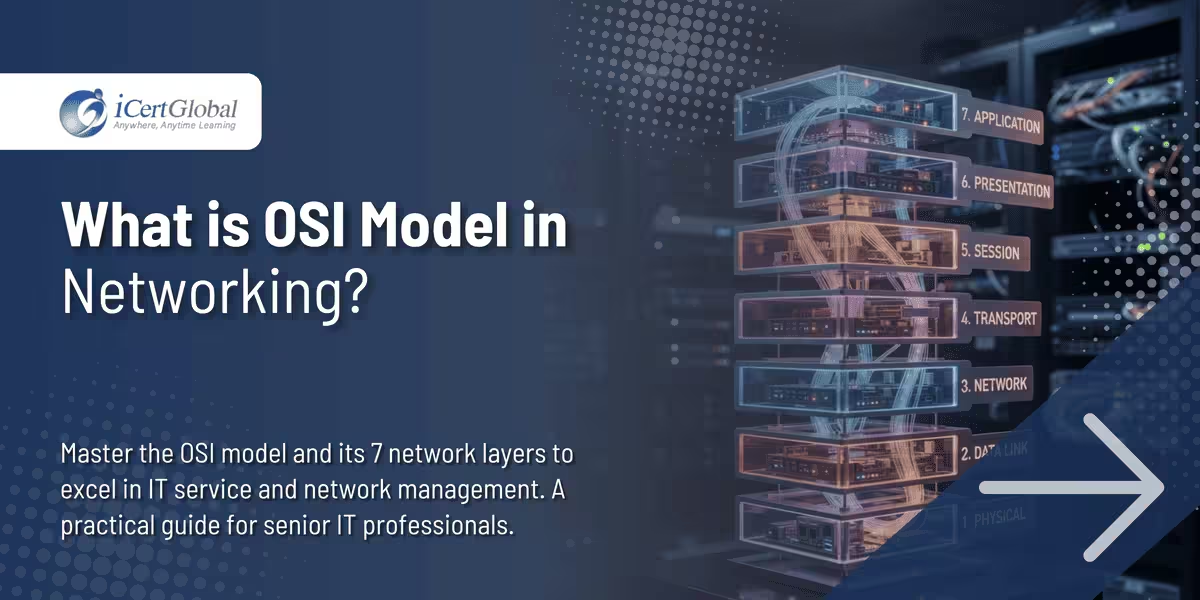
What is OSI Model in Networking
What is OSI model in networking? Learn the 7 layers, protocols, devices, how data flows, and how OSI...
7 Strong Advantages of ITIL Certification
Learn the top benefits of ITIL certification and how it boosts your IT career and organizational value....
Ensuring Tech Support Functions in Businesses
Learn how businesses keep their technology like computers and internet running well with ITSM and ITIL....
The Importance of COBIT in IT Management
Learn what COBIT is and why it matters for managing technology in businesses. ...
Guide to the Service Desk Manager Role
Learn about the key responsibilities, skills, and career path of a Service Desk Manager....
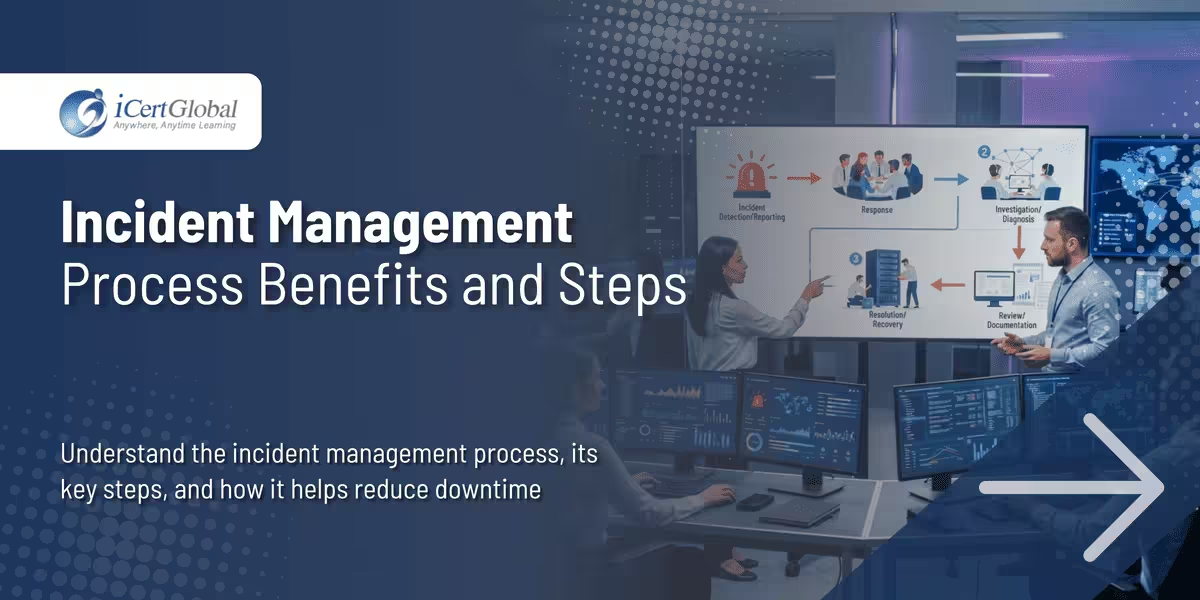
Incident Management Process Benefits and Steps
Master the incident management process to reduce downtime. Learn key steps, roles, and benefits to restore IT services...

Top Highest-Paying Programming Languages to Learn in 2026
Explore the top high-paying programming languages for 2026 and gain in-demand skills to boost your career, stay competitive,...

Top 5 Frontend Frameworks to Watch in 2026
Master frontend frameworks to accelerate your career. Compare React, Angular, Vue, Svelte, and Next.js to build modern web...


