
You're drowning in redundant tasks. Your day is spent clicking, copying, and pasting - work a machine should be doing. You are a human bottleneck, and your career progression is stalled because your output is measured in execution volume, not strategic value. Meanwhile, organizations across IT, BPO, and finance in cities like Delhi and Chennai are desperately seeking skilled RPA developers who can implement Robotic Process Automation (RPA) solutions, cut costs by 30-50%, and free up human capital for innovation. This skill gap is your opportunity. This is not a course on recording a macro. Our RPA course is engineered to make you an Automation Architect, capable of leading full-scale RPA automation deployments. We teach the practical, end-to-end framework: from identifying the right processes for automation (the most common failure point) to building resilient bots that handle real-world exceptions without crashing. The focus is always on ROI - the time and money your bots save - because that's the only metric that matters to management. Unlike generic tutorials, our program immerses you in Automation Anywhere, the leading RPA tool for major Palo Alto, CA enterprises. You will build and deploy bots that interact with SAP, Oracle, and other legacy systems commonly used in Palo Alto, CA banking and telecom. You'll move beyond simple task automation to tackle complex cognitive processes using IQBot, ensuring you're prepared for real-world enterprise RPA projects. The RPA Certification proves your knowledge; the practical skills prove your worth. We built this program for ambitious professionals who want to lead the automation shift. You can't waste time on irrelevant theory. Our curriculum is fast-paced, hands-on, and focused purely on deployable RPA skills. You'll get pre-built templates, real-world case studies from Palo Alto, CA clients, dedicated cloud labs for practice, and direct mentorship from instructors actively deploying bots today. Stop doing repetitive work; start building the RPA bots that do the work for you.
RPA Certification Course Overview in Palo Alto, CA
RPA Certification Training Highlights in Palo Alto, CA
More Than a Course - It's Your Career Accelerator
Automation Anywhere-Focused Curriculum
Master the specific platform used by leading firms in Palo Alto, CA IT and Shared Services, ensuring your skills are immediately marketable.
30+ Hours of Cloud Lab Access
Get hands-on with a dedicated cloud environment to build, test, and troubleshoot bots without needing to configure your personal machine.
ROI-Driven Project Methodology
Learn the critical "RPA Assessment" phase - the key to successful projects - to ensure every bot you build delivers tangible cost savings.
Advanced Cognitive Automation
Move beyond basic bots by mastering IQBot for complex data extraction and processing, securing you the high-value roles.
2000+ Practice Questions & Labs
Test your deployment skills and conceptual understanding against the rigor required for actual production environments, not just the exam.
24x7 Expert Guidance & Support
Get direct, practical answers from Automation Anywhere-certified professionals, eliminating guesswork when your bot deployment fails.
Upcoming Schedule
Where your classroom training takes place
Note: The training location may be subject to change depending on the number of participants registered for the session and participant convenience. Confirmed venue details will be shared by email after enrollment.
Why Get RPA Certified?
The Credential That Ends the Gatekeeping
Stop getting filtered out by HR bots
Get the technical certification that is an explicit requirement for RPA Developer and Architect roles.
Unlock salary uplifts of 30%+
Secure compensation levels reserved for professionals who can prove measurable cost savings through automation.
Transition from tactical execution to strategic leadership
Design the future of work and gain a seat in business process optimization discussions.
Who This Program Is For
This certification training is ideal for:
Process Analysts
Business Analysts
IT Developers / Testers
System Administrators
Operations Managers
Consultants
If your current role is bottlenecked by repetitive work, or if you're tasked with finding cost savings and efficiency in your organization, this program is your mandatory upskill path to becoming an automation leader.
Skill Gap
The growing demand for RPA professionals has created a significant skill gap in the industry, with many companies struggling to find qualified candidates with the necessary skills and expertise. According to a report by McKinsey, the demand for RPA professionals is expected to grow by 20% in the next two years, outpacing the supply of skilled workers. To address this gap, the RPA Certification Training Program provides students with a comprehensive education in RPA, including hands-on training and real-world project experience.
Students learn the skills and knowledge required to design, develop, and deploy RPA bots, as well as the tools and technologies used in the industry. In Palo Alto, CA, companies are looking for RPA professionals who can hit the ground running and make an immediate impact on their operations. By completing the RPA Certification Training Program, students can gain the skills and expertise needed to fill this gap and launch a successful career in RPA.
Eligibility and prerequisites
The leading RPA certifications, such as the Automation Anywhere Certified Advanced RPA Professional, are designed to be accessible yet technically rigorous. While there are no mandatory prerequisites, true success requires hands-on skill mastery and applied understanding. Here's what you need to know before qualifying.
No Mandatory Prerequisites: There are no formal educational or professional experience requirements to attempt the certification exam - making this a great entry point for aspiring automation professionals.
Recommended Knowledge: A foundational understanding of programming logic and business processes is highly recommended to accelerate your learning curve.
Mandatory Training Requirement: Completion of a comprehensive, hands-on RPA training program like ours is essential to build production-level bots and pass the certification with confidence.
The Real Benchmark: The only true prerequisite is the ability to design, build, and manage a robust bot portfolio that delivers measurable ROI - and this program gives you exactly that capability.
Work Responsibilities
RPA professionals are responsible for designing, developing, and deploying RPA bots that can automate repetitive and mundane tasks. They work closely with business analysts and process owners to understand business requirements and develop RPA solutions that meet these needs. RPA professionals must have strong technical skills, including programming, data analysis, and software development.
They must also have excellent communication and project management skills, as they work with cross-functional teams to implement RPA solutions. In Palo Alto, CA, RPA professionals work on some of the most complex and innovative projects in the industry, automating tasks such as data processing, document processing, and customer service. By working in this field, professionals can gain a unique perspective on how technology can be used to improve business operations and customer experience.
The growth of RPA is driven by the increasing demand for automation and AI in various industries, including finance, healthcare, and manufacturing. According to a report by Gartner, the global RPA market is expected to grow by 30% in the next two years, driven by the adoption of cloud-based RPA platforms and the increasing use of AI and machine learning in RPA.
Skills You Will Gain In RPA Certification Training Program
Process Assessment & Selection
Learn to identify and score processes based on ROI, complexity, and stability. Stop automating the wrong thing; focus on the high-impact 80%.
Enterprise Control Room Mastery
Go beyond bot development. Master the security, scheduling, auditing, and user management features of the Control Room for enterprise-level governance.
Bot Development & Resiliency
Build bots that don't fail on day two. Learn structured error handling, logging mechanisms, and exception management for robust, production-ready automation.
Cognitive Automation (IQBot)
Move past structured data. Deploy IQBot for intelligent document processing (IDP), handling semi-structured data like invoices and forms to unlock truly complex processes.
Secure Credentials & Vault Management
Implement secure credential management practices to ensure your bots access production systems without compromising security - a non-negotiable in finance and compliance.
Bot Deployment & Version Control
Master the lifecycle from development to production. Learn proper version control, code review standards, and deployment best practices used by Fortune 500 companies.
Course Modules & Curriculum
Overview of Robotics Process Automation
Lesson 1: Understanding the Automation Landscape
Differentiate RPA from traditional automation tools like macros and scripting. Brutally assess the business value of Robotic Process Automation: understand where RPA delivers up to 50% cost savings and where simpler processes may not need complex bots. This foundational insight is critical for any aspiring RPA developer.
Lesson 2: The RPA Lifecycle & Methodology
Master the full lifecycle: Process Identification, Assessment, Design, Development, Testing, and Deployment. Learn the critical "Discovery Phase" that prevents 90% of all bot failures and ensures automation success.
Lesson 3: Introduction to Automation Anywhere
Understand the Automation Anywhere architecture including Control Room, Bot Creator, and Bot Runner. Set up your client environment and connect securely to the Control Room for enterprise-grade governance. Hands-on experience in this module prepares you for real-world RPA projects and global RPA Certification.
RPA Using Automation Anywhere
Lesson 1: Core Bot Development Commands (Part 1)
Master essential commands for data manipulation, file operations, variable creation, and error handling. Build your first non-trivial bot for a standard back-office process and gain practical automation experience.
Lesson 2: Core Bot Development Commands (Part 2)
Deep dive into web automation (interacting with browsers), email automation (sending/receiving attachments), and PDF integration - the backbone of most financial and HR bots.
Lesson 3: Advanced Command Mastery
Utilize PGP/GPG for security, XML/JSON parsing for integration, and the powerful "String Operation" command for data cleanup - skills that separate developers from basic bot recorders.
Enterprise Web Control Room
Lesson 1: Control Room User & Role Management
Implement robust access controls. Define user roles (Admin, Developer, Runner, Auditor) and manage bot deployment permissions - a must for compliance and security in banks and BPOs.
Lesson 2: Scheduling & Monitoring Bots
Learn how to schedule RPA automation effectively. Manage workload queues, prioritize critical jobs, and configure alerts for bot failures and performance metrics. Hands-on expertise here is highly valued by top RPA companies.
Lesson 3: Credentials and Security Management
Securely store and retrieve credentials using the Credential Vault. Understand why hard-coding passwords is a critical mistake and implement industry-standard practices for secure access. These skills are integral for professional RPA Certification and enterprise-grade deployments.
Analytics Anywhere Client Variables & Commands
Lesson 1: Variables, Data Types, and Logic
Master System, User, and Credential variables. Implement advanced logic using IF/ELSE statements, LOOPS, and error handling blocks to build resilient, decision-making bots.
Lesson 2: Excel, Database, and SAP Automation
Hands-on automation of Excel (advanced data filters, pivot tables), SQL/Database connectivity, and specific commands for SAP/Oracle interaction - the three enterprise workhorses.
Lesson 3: Exception Handling and Resiliency
Build bots that recover from failure. Implement "Begin/End Error Handling" blocks, define retry logic, and log errors for proactive maintenance and robust automation.
Metabots and IQBots
Lesson 1: Metabots and Its Usage
Learn to build reusable, standardized components (Metabots) for complex application interaction. Increase bot development speed and maintainability by utilizing modular design principles.
Lesson 2: IQBots for Cognitive Automation
Dive into Intelligent Document Processing (IDP). Train IQBot to extract data from unstructured documents such as invoices, forms, and contracts - the key to automating processes with variable input.
Lesson 3: Advanced Features & Best Practices
Master workload management, version control, and audit log analysis for enterprise-grade bot deployment. Learn essential RPA best practices necessary for large-scale automation projects and prepare for professional RPA Certification.
RPA Training Program Roadmap in Palo Alto, CA


Industry Applicability
RPA (Robotic Process Automation) technology is widely adopted across various industries, including finance, healthcare, and manufacturing. In these sectors, RPA is used to automate repetitive and mundane tasks, freeing up human workers to focus on high-value tasks that require creativity and problem-solving skills. The use of RPA in these industries has been shown to increase efficiency and productivity, while reducing errors and improving customer satisfaction.
According to a study by Gartner, organizations that implemented RPA saw an average increase of 30% in productivity and a 25% reduction in costs. In Palo Alto, CA, companies like Facebook and Tesla are already leveraging RPA to streamline their operations and improve customer experience. By automating tasks such as data entry and document processing, these companies can focus on innovation and growth.
Practical Application
RPA Certification Training Program teaches students how to design, develop, and deploy RPA bots that can mimic human actions and interact with various applications and systems. Students learn how to use tools such as UiPath and Blue Prism to build workflow automation and integration with APIs, web services, and external data sources. The program covers topics such as process discovery, bot design, and deployment, as well as testing, validation, and maintenance of RPA bots.
Students also learn about the security and compliance aspects of RPA, including data encryption, access control, and audit trails. In practice, RPA bots can be used to automate tasks such as email processing, invoice processing, and data extraction, freeing up human workers to focus on more complex and creative tasks. By automating these tasks, organizations can improve efficiency, reduce costs, and enhance customer experience.
Customer Testimonials
Hear from our successful graduates
"Exceptional PMP Training Experience with iCertGlobal I recently completed the PMP training by iCertGlobal, and I must say it was an outstanding experience. The instructor demonstrated a deep understanding of project management principles and brought real-world experience to the table. The training material's provided were comprehensive and well-organized, offering valuable insights and practical tips. I would highly recommend iCertGlobal to anyone looking for professional PMP Training.. "

John Anderson
"iCertGlobal provided a great learning experience with clear, well organised courses. The trainers were knowledgeable, and the support team was responsive to all my questions. The study material was comprehensive, which helped me pass my certification exam with ease. Highly recommended for anyone looking to get certified. "
James Walsh
"iCertGlobal is the best Certificate Training Organization. you will get good instructor and they will improve leaning sills and give the real time experience examples due to that you will get pass in first try. "
Andy Moran
"The course content, exam prep questions, interactive Q&A, and real-life examples made attending this PMP Project Management training class worth my time and money. The support from iCertGlobal was exceptional and I would like to thank them for accepting my request of meeting the trainer post the session for clearing my doubts."
Tim Malone
"I had a good learning experience with icertGlobal and it had been an amazing development journey. Actually, I accidentally bumped into iCertGlobal while searching for an online course for preparing my PMP examination. With positive reviews all over the internet and quick responses to my questions, I was flabbergasted enough to sign-up immediately. The instructor-led PMP preparatory course helped me both offline and online preparations. All the high-quality materials written in simple layman language was enough to grasp the gist of various topics. The instructors were very knowledgeable as they imparted not only their wealth of experiences but also real life examples. Thanks a lot iCertGlobal for imbibing this great learning experience. "
Jason Walter
"Thank you for your great course, great support, rapid response and excellent service."
Hoda Alavi
"My trainer made the materials relatable and easy to understand. It was fun being in class everyday. "
Cassandra Corn
"Amazing trainer who was very supportive. "

Shanna Pilgrim
"Trainer was well versed in the subject matter and got the impression the gentleman was professional and educated within standards and procedures for PMI. "
Anthony Zamora
"The Training was good and customer service was perfect. "
Maka Diakhate
"Trainer was knowledgeable and lesson's pace was just right."

Roger Gonzales
"Trainer (Bruce) was very excellent in delivery and presentation. He provided me with all the tools required to be successful in the PMP exams with lots of quiz questions on all topics reviewed. "
Bashiru Ojibara
"The trainer, Emad was top notch and very knowledgeable. He is up to date with all current versions and is great in 1:1 Training. "

Jonathan Obien
"Thank you for your great course, great support, rapid response and excellent service"

Hoda Alavi
"Marc had very good knowledge and he was able to explain the material and provide guidance to get ready for the test. "

Roque Montesino
"Excellent Course. Zahn was a great instructor and the course material definitely will help me pass the PMP Exam "

Jared Nelson
"Great teacher, went out of his way in every possible aspect. "
Radiah Sims
"Customer service provided by Robin was great as he was very responsive and the trainer, John, was very good at relating the content to my industry. "

Jason D Niebauer
Corporate Training
Tailored programs for teams with enterprise support

Ready to transform your team?
Get a custom quote for your organization's training needs.
Course & Support
Everything you need to know about our training options and support
Growth
RPA professionals are in high demand, with salaries ranging from $80,000 to $150,000 per year, depending on experience and location. By completing the RPA Certification Training Program, students can gain the skills and expertise needed to launch a successful career in RPA and take advantage of this growing market.
In Palo Alto, CA, companies are looking for RPA professionals who can help them stay ahead of the competition and drive innovation in their operations. By working in this field, professionals can gain a unique perspective on how technology can be used to improve business operations and customer experience.
Build In-Demand Skills
Explore our instructor-led RPA training to learn about the course duration, cost, eligibility, and certification process. You get practical learning, exam-focused preparation, and expert guidance. Ready to get started? Compare RPA certification training options and choose a classroom or live online format that fits your schedule.
RPA Training in Other Cities
Our RPA certification training is available in major cities worldwide
Related Blogs
Stay updated with the latest insights and trends in your field

RPA: Enhancing the Workforce and Augmenting Human Potential
Learn how RPA is transforming the workforce by enhancing human potential, boosting efficiency & driving innovation through automation for greater productivity.
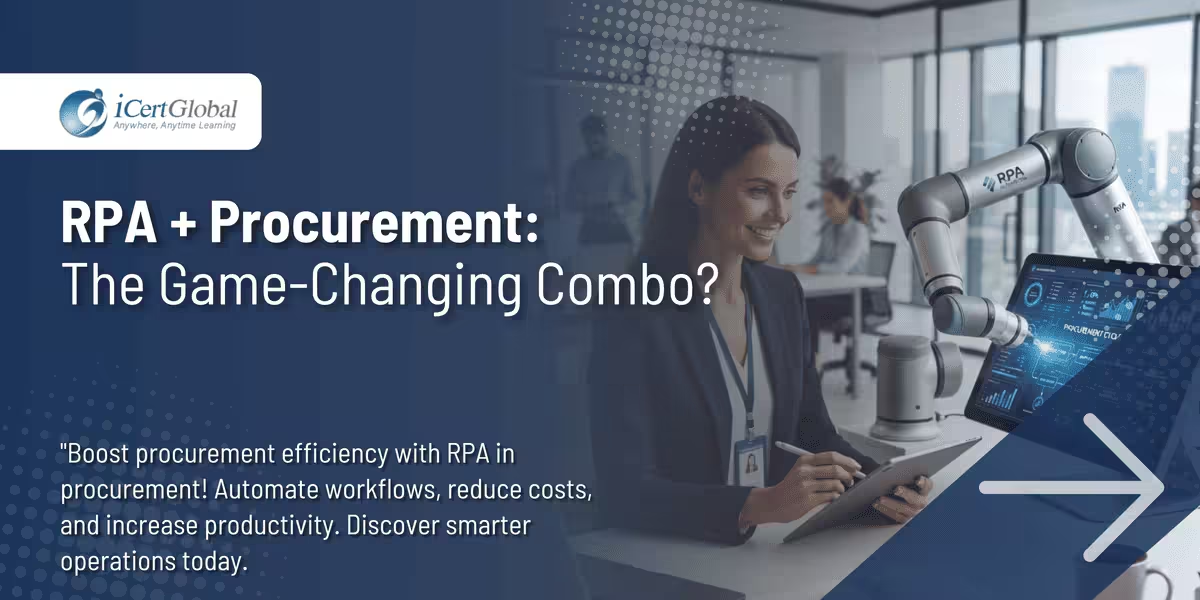
RPA + Procurement: The Game-Changing Combo?
Boost procurement efficiency with RPA in procurement! Automate workflows, reduce costs, and increase productivity. Discover smarter operations today.
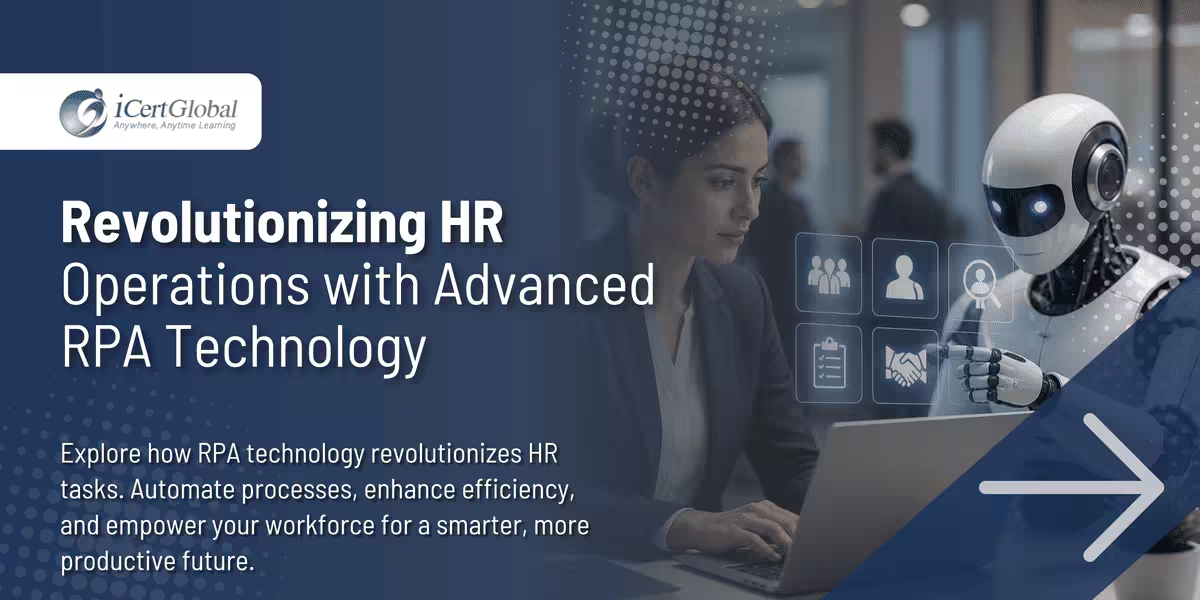
Revolutionizing HR Operations with Advanced RPA Technology
Explore how RPA technology revolutionizes HR tasks. Automate processes, enhance efficiency, and empower your workforce for a smarter, more productive future.
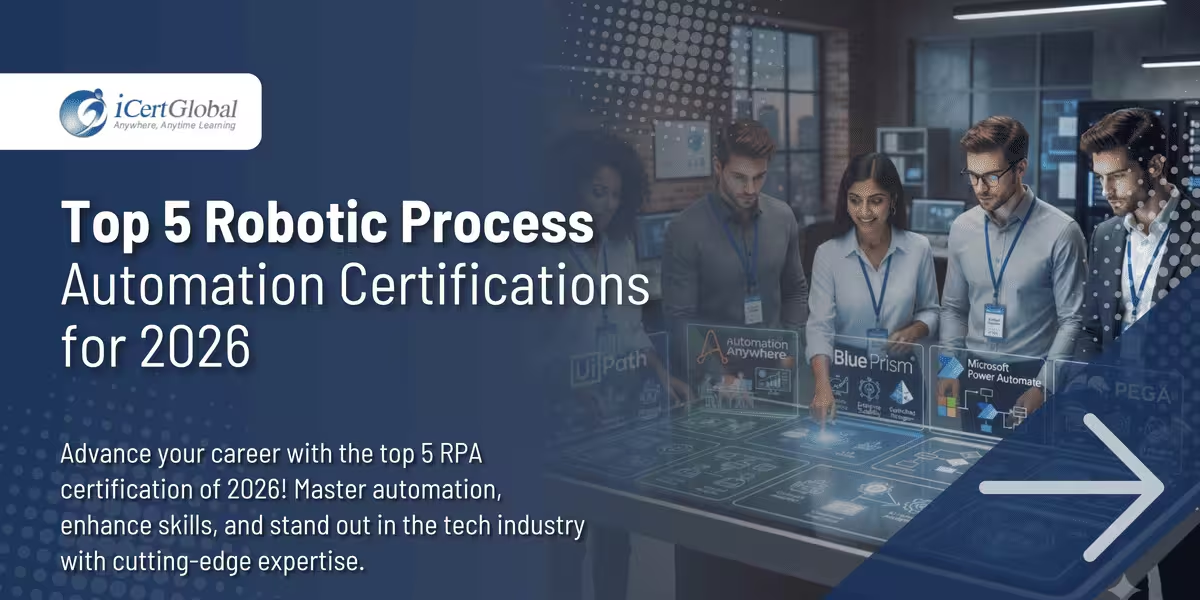
Top 5 Robotic Process Automation Certifications for 2026
Advance your career with the top 5 RPA certification of 2026! Master automation, enhance skills, and stand out in the tech industry with cutting-edge expertise.

RPA Certification Course: Unleash Automation's Power Today!
Unlock automation's power with our Robotic Process Automation Certification Training Course. Master best practices & earn certification to boost your career!
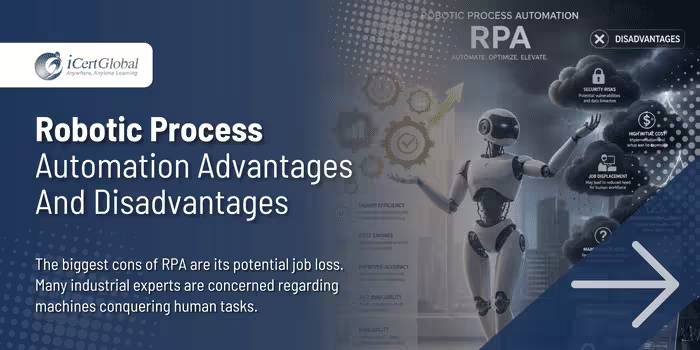
Robotic Process Automation Advantages And Disadvantages
The biggest cons of RPA are its potential job loss. Many industrial experts are concerned regarding machines conquering human tasks.


