


Kathy Rogers
Director at Resolve It, Inc.
I am a Project Management Professional and Lean Six Sigma Green Belt with extensive experience in Change Management and fundraising.
Classroom Training and Live Online Courses
Stop being just a project manager. Get the globally-recognized credential that makes you a strategic leader and unlocks senior-level pay.

You're already managing projects - you just don't have the title. You're the one chasing stakeholders, fighting scope creep, and putting out fires, but you're still called a "Project Coordinator" or "Team Lead." Meanwhile, PMP-certified Project Managers are given formal authority, dedicated budgets, and command salaries 25-40% higher for applying the structured processes you're trying to implement ad-hoc. Your resume gets filtered out by HR bots scanning for "PMP," and internal promotions go to those who have it listed as "required." That stops now. This isn't another course designed to make you memorize the PMBOK Guide. Our PMP Training Program is designed by battle-tested Project Management Professionals who have managed projects in the real world of Yuma, AZ IT, construction, and manufacturing - environments with impossible deadlines, disengaged sponsors, and teams that don't report to them. They've built this program to teach you the PMP framework while showing you how to actually use it to control chaos when the project plan inevitably gets thrown out the window. Unlike certification mills that teach you only how to pass the exam, we build project leadership capability. You'll learn how to build a project charter that gets executive buy-in, create a Work Breakdown Structure that prevents missed requirements, and manage risk instead of just reacting to issues. The exam is just the proof - the real value is walking into your next project meeting and confidently shutting down out-of-scope requests, presenting a clear status report based on data, and leading your team with authority, not just influence. We've built this for working professionals who can't afford to stop their careers to get certified. Weekday evening and weekend batches, fully interactive with live Q&A. Every session recorded. Beyond the training, you get project charter and risk register templates you can use tomorrow, case studies from Yuma, AZ services and infrastructure projects, 24/7 expert support, and end-to-end assistance with the notoriously difficult PMP application - where most aspiring candidates fail before they even get to the exam.
More Than a Course - It's Your Career Accelerator
Learn with confidence knowing your training program aligns with the official PMI standards and requirements.
Unlock your potential with expert teachers who are PMI-certified professionals guiding you to success.
Aim for the PMP certification and choose a training schedule that fits your time as we offer weekday-evening, weekend-only, or a full 4-day bootcamp.
Master the concepts fast with 35 hours of hands-on learning and receive individualized performance feedback through 10+ exam simulators.
Get on top of your weaknesses with 2000+ tailor-made practice questions and mock tests.
Be worry-free as industry experts are available 24x7 to solve your doubts and assist you at every turn.
50 sample questions, the PMBOK® 8th-edition ECO cheat sheet, and a 5-week study plan — one PDF.
Delivered to your inbox in under a minute. Unsubscribe anytime.
Your PMP® Exam Prep Kit is on its way.
Earn an industry-recognized certificate upon successful completion
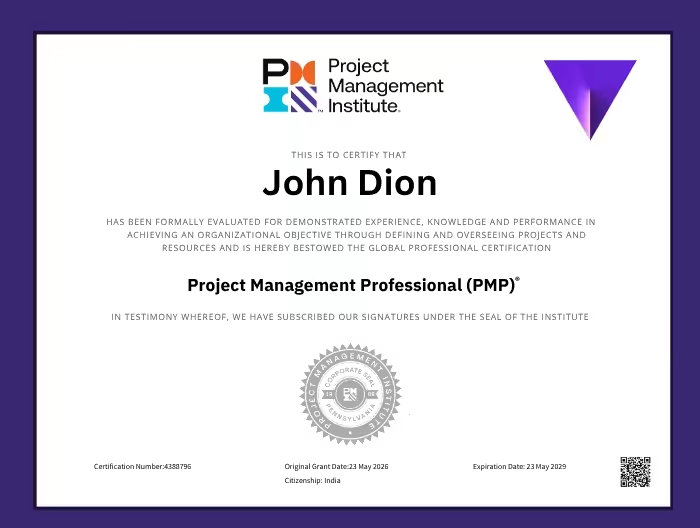
Upon successful completion of our PMP course, you will receive an official PMI-authorized certificate that is globally recognized. This certificate validates your expertise in project management and is highly valued by employers worldwide.
Project management methodologies, such as the Project Management Body of Knowledge (PMBOK), are widely recognized as standards for managing complex projects globally. The PMP Certification Training Program is a crucial step in validating a project manager's expertise in adhering to these frameworks. This comprehensive training program equips professionals with the knowledge and skills necessary to navigate the intricacies of project management, including scope definition, schedule development, and resource allocation.
Effective project planning and execution are critical components of project management, particularly in industries where failure to deliver on-time and within budget can have significant consequences, such as construction, IT, and finance. The PMP Certification Training Program addresses these challenges by providing a structured approach to project planning, including the development of work breakdown structures and the creation of project schedules using Gantt charts and critical path method (CPM) analysis. By mastering these technical skills, professionals can ensure the success of their projects and enhance their career prospects in industries like Yuma, AZ's rapidly expanding solar energy sector.
Professionals who complete the PMP Certification Training Program will possess the skills necessary to oversee complex projects, manage cross-functional teams, and communicate project status and progress to stakeholders. With a comprehensive understanding of project management best practices, these professionals can make informed decisions and adapt to changing project requirements, ultimately contributing to the success of their organizations. The training program's practical applications and hands-on experience enable professionals to translate theoretical concepts into actionable strategies, preparing them to take on leadership roles in project-related initiatives.
Tailored programs for teams with enterprise support
Get a custom quote for your organization's training needs.
Scenario-based questions that mirror the real exam. Get your score plus a weak-area report.
We only use your email to send the simulator and your results.
Check your inbox for the login link.
In project management, stakeholders play a crucial role in influencing project outcomes, and effective stakeholder management is essential for achieving project success.
The PMP Certification Training Program emphasizes the importance of stakeholder analysis, including identifying stakeholder profiles, tracking stakeholder engagement, and developing stakeholder communication strategies.
By leveraging tools such as the stakeholder matrix and the earned value management (EVM) method, professionals can make data-driven decisions and prioritize stakeholder needs, ultimately fostering a collaborative and productive project environment.
Note: The training location may be subject to change depending on the number of participants registered for the session and participant convenience. Confirmed venue details will be shared by email after enrollment.
Learn what can go wrong before it does. You will learn how to quantify potential impacts and create contingency plans.
Master it or let it drag your project down. You will develop frameworks to manage competing interests, unrealistic expectations, and scope creep.
Become efficient at managing resources that reflect reality. You will learn to estimate time, budget, and personnel needs based on historical data, and avoid guesswork.
Get a grip on it before falling short. You will get templates and processes for status reporting, escalation paths, and documentation that keeps everyone informed.
Realize that every decision can make or break your project. You will understand real processes for evaluating, approving, and implementing changes instead of saying "yes" to everything.
Cut through the noise for signal or rely on inconsistent gut feeling. You will learn how to use earned value management and other metrics to assess the scenario and take appropriate decisions.
Syllabus, batch dates and exam-voucher offer in one email
Module-by-module syllabus, upcoming batch dates, and the current ATP exam-voucher discount — sent to your inbox.
Curriculum, batch dates and fee breakdown are heading to your inbox.
This certification training is ideal for:
If you lead projects and meet PMI's mandatory experience requirements, this program is engineered to get you certified.
To achieve project success, professionals must be able to manage project risks, including identifying, assessing, and mitigating potential risks.
The PMP Certification Training Program equips professionals with the knowledge and skills necessary to develop comprehensive risk management plans, including conducting risk workshops, developing risk registers, and implementing risk responses using techniques such as hedging, transferring, and avoiding risks.
By mastering these technical skills, professionals can ensure the success of their projects and enhance their career prospects in industries like construction and engineering, which are prominent in Yuma, AZ's regional economy.


The Credential That Ends the Gatekeeping
Get the senior-level interviews your experience already deserves.
Gain access to bonus structures that are reserved for certified project leaders.
Gain a seat at the decision-making table.
Answer four quick questions to see which PMI eligibility path fits you.
Experience needed, by education
Your eligibility path is in your inbox.
Indicative check based on published PMI criteria. PMI makes the final decision when you apply.
The Project Management Professional certification is globally respected precisely because it is not for beginners. PMI has established clear benchmarks to ensure every certified professional has a proven foundation in both formal project management education and real-world leadership. Here is the high-level breakdown of what you need to qualify.
35 Hours of Formal PM Training: A mandatory requirement that is fully satisfied by completing our PMI-Authorized training program.
Project Leadership Experience (with a Degree): A four-year degree plus a minimum of 4,500 hours (approx. 3 years) spent leading and directing projects.
Project Leadership Experience (with a Diploma): A secondary degree or diploma plus a minimum of 7,500 hours (approx. 5 years) spent leading and directing projects.
The PMP Certification Training Program offers a holistic approach to project management, encompassing people, processes, and technology. The training program emphasizes the importance of project metrics, including cost, schedule, and quality metrics, which are essential for measuring project performance and identifying areas for improvement. By leveraging tools such as the earned value analysis (EVA) and the project schedule performance index (SPI), professionals can make informed decisions and adapt to changing project requirements, ultimately contributing to the success of their organizations.
This comprehensive training enables professionals to develop a systemic approach to project management, preparing them to take on leadership roles in project-related initiatives. Skills such as stakeholder management, risk management, and project metrics analysis are essential for achieving project success, but many professionals lack the necessary knowledge and skills to apply these concepts effectively. The PMP Certification Training Program addresses this skills gap by providing a structured approach to project management, including practical exercises and hands-on experience that enable professionals to translate theoretical concepts into actionable strategies.
The PMP Certification Training Program offers a comprehensive training solution that enhances project managers' skills and knowledge, enabling them to oversee complex projects and drive business results in industries like Yuma, AZ's manufacturing sector. With a thorough understanding of project management best practices, professionals can make informed decisions, adapt to changing project requirements, and lead cross-functional teams to achieve project success. The training program's practical applications and hands-on experience prepare professionals to take on leadership roles in project-related initiatives and advance their careers in the field of project management.
Learn from certified experts with 15+ years of experience
Project management is a discipline that involves leading and directing a team to achieve specific goals within a defined timeline and budget. This lesson introduces the fundamental concepts of project management, including the definition of a project, project management, and the project lifecycle. It highlights the importance of PMP certification and explains how the exam validates a professional's ability to manage complex projects effectively.
The PMP exam is structured around three main domains: People, Process, and Business Environment. This lesson explores the structure of the exam, the breakdown of questions by domain, and how the weight is distributed (People - 42%, Process - 50%, Business Environment - 8%). Learners will understand the tasks and enablers within each domain and how to prepare for the variety of project management methodologies covered in the exam.
Effective leadership is crucial in project management. This lesson focuses on understanding various leadership styles, including directive and collaborative approaches, and applying them to diverse team settings. Learners will explore how to set clear goals, create a shared vision, and foster an environment of trust and collaboration to enhance team performance.
Conflict is inevitable in project teams, and managing it effectively is an essential skill for project managers. This lesson covers conflict resolution techniques, such as understanding the source and stage of conflict, analyzing the context, and implementing solutions. It also explores how to negotiate project agreements and build consensus in a variety of scenarios.
Project managers are responsible for empowering team members to reach their full potential. This lesson addresses the importance of appraising performance, offering constructive feedback, and fostering team member growth. Learners will also explore how to identify training needs and provide resources to support continued development.
Emotional intelligence (EQ) is key to managing team dynamics. This lesson teaches learners how to apply EQ to assess the emotional needs of team members and stakeholders. By adjusting communication and leadership approaches based on emotional awareness, project managers can engage teams more effectively and ensure smoother project execution.
Effective scope management ensures that a project stays on track and delivers the expected outcomes. This lesson covers methods for defining and controlling scope, including developing a work breakdown structure (WBS), monitoring progress, and preventing scope creep. Learners will also explore how to prioritize and validate requirements to ensure alignment with stakeholder expectations.
Scheduling and resource management are critical for delivering a project on time and within budget. This lesson covers how to estimate task durations, manage dependencies, and create realistic schedules. Learners will also explore resource allocation techniques and budgeting strategies to ensure that resources are utilized effectively throughout the project lifecycle.
Managing quality ensures that the project's deliverables meet the required standards. This lesson focuses on determining quality standards, monitoring performance, and recommending improvements. Additionally, it covers the risk management process, including risk identification, assessment, and mitigation strategies to minimize potential negative impacts on the project.
Procurement and communication are key to project success. This lesson explores how to manage procurement needs, select suppliers, negotiate contracts, and monitor supplier performance. It also emphasizes the importance of communication management, including how to define stakeholder communication needs, establish channels, and ensure timely and accurate information flow.
Change is inevitable in project management, and managing it effectively ensures project success. This lesson focuses on strategies for handling changes to scope, schedule, or resources. Learners will also explore how to integrate change management practices into project processes to maintain alignment with project goals and stakeholder expectations.
Compliance is a key consideration for any project. This lesson explores how to identify and understand the regulatory and compliance requirements that may affect a project. Learners will explore methods for addressing compliance issues and the potential consequences of noncompliance, ensuring that projects adhere to legal and organizational standards.
Ultimately, the success of a project is measured by the value it delivers. This lesson teaches learners how to define and measure project benefits and ensure that value is realized throughout the project lifecycle. Learners will explore how to communicate project value to stakeholders and demonstrate progress toward achieving organizational goals.
External factors, such as regulatory changes, technological advancements, and market shifts, can significantly impact project scope and execution. This lesson covers how to monitor these changes, assess their impact on the project, and adapt the project scope and deliverables to mitigate negative effects while capitalizing on new opportunities.
Organizational change can influence the outcomes of projects. This lesson focuses on how to assess organizational culture and determine how changes within the organization will impact the project. Learners will explore strategies for managing the impact of organizational change on projects and aligning project goals with the organization's evolving needs.
Agile project management emphasizes flexibility and collaboration, making it an ideal approach for certain projects. This lesson introduces the key principles and values of Agile methodologies and compares them with traditional project management approaches. Learners will explore specific Agile frameworks, such as Scrum and Kanban, and understand when and how to apply Agile practices in various project environments.
Many projects benefit from a combination of traditional (predictive) and Agile (adaptive) methods. This lesson delves into hybrid project management approaches, teaching learners how to blend the structure of traditional project management with the flexibility of Agile methodologies. By understanding how to integrate the two approaches, learners will be able to apply hybrid strategies to real-world projects effectively.
The project charter is the foundational document that outlines a project's goals, objectives, and deliverables. This lesson covers how to develop a project charter, as well as techniques for managing and defining project scope. Learners will explore how to break down scope using work breakdown structures (WBS) and ensure that all deliverables are clearly defined and achievable.
Risk and resource management are essential components of successful project planning. This lesson teaches how to identify and assess project risks, develop mitigation strategies, and allocate resources effectively. Learners will also explore how to plan and manage resources to ensure that the project remains on schedule and within budget.
Executing a project plan involves managing people, resources, and tasks to keep the project on track. This lesson covers how to implement the project plan, manage day-to-day activities, and ensure that all project objectives are met. Learners will also explore how to manage stakeholder expectations and handle project constraints such as scope, time, and cost.
Monitoring project performance is essential to ensure that the project stays aligned with its goals. This lesson covers how to track project performance using key metrics and performance indicators. Learners will learn how to take corrective actions when necessary to keep the project on track and how to manage deviations effectively.
Project closure ensures that all objectives are met and deliverables are handed over to the client or stakeholders. This lesson covers how to successfully close a project, including validating that all deliverables meet the required criteria and ensuring that the project is formally completed. Learners will also explore how to conduct a final review and document lessons learned.
Lessons learned and knowledge transfer are critical for future project success. This lesson focuses on capturing lessons learned during the project and sharing them with relevant stakeholders. Learners will also explore how to ensure knowledge transfer within the team to support future projects and continuous improvement in project management practices.
Everything you need to know about our training options and support
Book a free 15-minute counselling call — we'll map your eligibility, timeline, and salary ROI.
Free · 15 minutes · No obligation
An advisor will call you in your chosen slot.
The PMP Certification Training Program is specifically designed to equip professionals with the knowledge and skills necessary to pass the Project Management Professional (PMP) certification exam and to apply project management best practices in their work environments. By providing a structured approach to project management, including scope definition, schedule development, and resource allocation, the training program prepares professionals to manage complex projects, lead cross-functional teams, and communicate project status and progress to stakeholders. The training program's focus on practical applications and hands-on experience enables professionals to develop a systemic approach to project management and prepare for the PMP certification exam.
Professionals who complete the PMP Certification Training Program can expect to see significant growth in their careers, including increased job prospects, higher salaries, and greater job satisfaction. The training program's comprehensive approach to project management, including stakeholder management, risk management, and project metrics analysis, enables professionals to develop a deep understanding of project management principles and best practices. By leveraging this knowledge and skills, professionals can drive business results, lead cross-functional teams, and achieve project success in industries like Yuma, AZ's renewable energy sector.
The PMP Certification Training Program is a strategic investment in professionals' careers, enabling them to enhance their skills and knowledge in project management and drive business results in their organizations. By providing a comprehensive training solution that addresses skills gaps in stakeholder management, risk management, and project metrics analysis, the training program equips professionals with the knowledge and skills necessary to oversee complex projects and lead cross-functional teams to achieve project success. With a thorough understanding of project management best practices, professionals can make informed decisions, adapt to changing project requirements, and advance their careers in the field of project management.
Hear from our successful graduates
"Exceptional PMP Training Experience with iCertGlobal I recently completed the PMP training by iCertGlobal, and I must say it was an outstanding experience. The instructor demonstrated a deep understanding of project management principles and brought real-world experience to the table. The training material's provided were comprehensive and well-organized, offering valuable insights and practical tips. I would highly recommend iCertGlobal to anyone looking for professional PMP Training.. "

"iCertGlobal provided a great learning experience with clear, well organised courses. The trainers were knowledgeable, and the support team was responsive to all my questions. The study material was comprehensive, which helped me pass my certification exam with ease. Highly recommended for anyone looking to get certified. "
"iCertGlobal is the best Certificate Training Organization. you will get good instructor and they will improve leaning sills and give the real time experience examples due to that you will get pass in first try. "
"The course content, exam prep questions, interactive Q&A, and real-life examples made attending this PMP Project Management training class worth my time and money. The support from iCertGlobal was exceptional and I would like to thank them for accepting my request of meeting the trainer post the session for clearing my doubts."
"I had a good learning experience with icertGlobal and it had been an amazing development journey. Actually, I accidentally bumped into iCertGlobal while searching for an online course for preparing my PMP examination. With positive reviews all over the internet and quick responses to my questions, I was flabbergasted enough to sign-up immediately. The instructor-led PMP preparatory course helped me both offline and online preparations. All the high-quality materials written in simple layman language was enough to grasp the gist of various topics. The instructors were very knowledgeable as they imparted not only their wealth of experiences but also real life examples. Thanks a lot iCertGlobal for imbibing this great learning experience. "
"Thank you for your great course, great support, rapid response and excellent service."
"My trainer made the materials relatable and easy to understand. It was fun being in class everyday. "
"Amazing trainer who was very supportive. "

"Trainer was well versed in the subject matter and got the impression the gentleman was professional and educated within standards and procedures for PMI. "
"The Training was good and customer service was perfect. "
"Trainer was knowledgeable and lesson's pace was just right."

"Trainer (Bruce) was very excellent in delivery and presentation. He provided me with all the tools required to be successful in the PMP exams with lots of quiz questions on all topics reviewed. "
"The trainer, Emad was top notch and very knowledgeable. He is up to date with all current versions and is great in 1:1 Training. "

"Thank you for your great course, great support, rapid response and excellent service"

"Marc had very good knowledge and he was able to explain the material and provide guidance to get ready for the test. "

"Excellent Course. Zahn was a great instructor and the course material definitely will help me pass the PMP Exam "

"Great teacher, went out of his way in every possible aspect. "
"Customer service provided by Robin was great as he was very responsive and the trainer, John, was very good at relating the content to my industry. "

Explore our instructor-led PMP training to learn about the course duration, cost, eligibility, and certification process. You get practical learning, exam-focused preparation, and expert guidance. Ready to get started? Compare PMP certification training options and choose a classroom or live online format that fits your schedule.
Our PMP certification training is available in major cities worldwide
Stay updated with the latest insights and trends in your field
Discover real PMP certification scholarships and financial aid options. Learn how to reduce your exam fees and advance...
Master cross-cultural leadership skills to manage global teams, pass certifications, and advance your international career. Learn key strategies...
Master your Program Management Professional interview with these top 50 PgMP interview questions and answers. Prove your strategic...
Master the CPMAI Framework to lead successful AI projects, boost your career ROI, and pass your certification exam....
Prepare for career success with top 50 PMI-RMP interview questions and answers. Master risk management concepts and ace...
Discover the 2026 PfMP certification salary potential. Learn how PMI's top portfolio credential boosts your earning power and...
Evaluate if the PfMP certification is worth it. Explore real career ROI, salary potential, and executive skill value...
Prepare for your project management job interview with essential CAPM interview questions and answers designed to showcase your...
Discover top PgMP jobs in 2026. Explore key program manager roles, salary trends, core competencies, and strategic paths...
Discover if the CAPM for graduates is right for you. Explore the career benefits, limitations, and real-world job...
Latest exam updates, PMBOK® 8th edition highlights, and the strategy to pass on your first attempt.
Check your inbox for the free guide.
Our experts are ready to help you with any questions about courses, admissions, or career paths. Get personalized guidance from industry professionals.

Live online and classroom training in PMP, ITIL, Agile, Six Sigma and more, with exam support included.
Subscribe to our newsletter for the latest updates on certifications and training opportunities.
Search iCertGlobal for certifications, courses and articles.

"PMI®", "PMBOK®", "PMP®", "CAPM®" and "PMI-ACP®" are registered marks of the Project Management Institute, Inc. | "CSM", "CST" are Registered Trade Marks of The Scrum Alliance, USA. | COBIT® is a trademark of ISACA® registered in the United States and other countries.