You've hit the limits of Flow, Process Builder, and Validation Rules. When business processes grow complex, data volume spikes, or requirements demand code, declarative tools aren't enough. Without the skills of a certified Salesforce Platform Developer, you become a bottleneck, while certified developers write high-value Apex, integrate external systems, and command salaries 30-50% higher than those stuck in declarative configuration. This hands-on Salesforce Platform Developer training is designed by Platform Developer I-certified architects who have deployed Apex in large-scale Albany, NY enterprises. You will learn to write bulkified, tested, and governor-limit-aware code that passes code reviews and performs reliably under heavy production loads. The Salesforce Platform Developer Certification proves you can extend the platform where declarative tools stop, making your resume stand out with keywords like "Apex", "Triggers", and "SOQL". The program emphasizes practical mastery: intensive labs for writing clean code, mandatory unit testing, and deep dives into Governor Limits that challenge inexperienced developers. Beyond the training, you receive real-world code templates, a secure Salesforce Platform Cloud sandbox for ongoing practice, and 24/7 expert support to debug tough problems. Achieve the Salesforce Platform App Builder Certification and Salesforce Platform Developer Certification to demonstrate your ability to build robust, custom solutions that meet any business need.
Salesforce Platform Developer Training Program Overview in Albany, NY
Salesforce Platform Developer Training Course Highlights in Albany, NY
More Than a Course - It's Your Career Accelerator
Apex Deep Dive
Go beyond syntax. Master the proper use of Collections, Exception Handling, and Bulkification - the skills required for production-grade code.
100% Code-Focused Labs
Spend the majority of your time writing, debugging, and testing Apex in real-world scenarios, ensuring code fluency, not just comprehension.
Testing Strategy Mastery
Learn to write mandatory Apex Unit Tests with 75% code coverage, including test methods that simulate edge cases and governor limit scenarios.
SOQL/SOSL Command
Gain proficiency in writing efficient, secure data retrieval and searching queries, including subqueries and relationship queries essential for high-performance code.
Instructor-Led Debugging
Get real-time feedback and walk-throughs on common governor limit and logic exceptions from instructors who debug Apex daily.
24x7 Expert Guidance & Support
Immediate, code-level support from certified developers who can help you resolve complex Apex errors outside of class hours.
Skill Gap
Many professionals in the field of customer relationship management (CRM) and Salesforce development face a significant skill gap in building and implementing complex workflows and automations. This gap can hinder their ability to optimize sales forecasting, lead management, and customer service processes. To close this skill gap, professionals need to master the intricacies of Salesforce platform development, including Apex, Visualforce, and Lightning Components.
They must understand how to design and deploy custom objects, triggers, and workflows that integrate with external systems. This requires in-depth knowledge of Salesforce's data model, object relationships, and query languages. In the Albany, NY area, where many organizations rely on Salesforce for customer engagement and sales analytics, filling this skill gap is crucial for business success.
By mastering Salesforce platform development, professionals can create tailored solutions that enhance data-driven decision-making and customer experience.
Corporate Training
Tailored programs for teams with enterprise support

Ready to transform your team?
Get a custom quote for your organization's training needs.
Growth
The Salesforce Platform Developer Certification Training Program is designed to equip learners with the skills and knowledge required to design, develop, and deploy scalable and efficient Salesforce applications. By mastering the Salesforce platform, learners can create custom solutions that automate business processes and workflows, such as campaign management and sales forecasting. To achieve this, learners must understand the intricacies of Salesforce's Lightning Development Framework, including Aura and Lightning Web Components.
They must also be familiar with Apex classes, triggers, and tests, as well as the Visualforce markup language. Furthermore, they must comprehend how to integrate Salesforce with external systems, such as APIs and web services. In the context of the Albany, NY business community, which is heavily invested in customer relationship management, acquiring this expertise can significantly enhance organizational performance.
By creating custom Salesforce applications, professionals can streamline business processes, improve data accuracy, and foster better customer relationships.
Upcoming Schedule


Skills You Will Gain In Our Salesforce Platform Developer Training Program
Apex Bulkification
Learn the single most critical coding practice to avoid Governor Limits. Write code that processes thousands of records efficiently in a single transaction.
Effective Trigger Architecture
Master the Trigger Framework pattern to ensure all business logic is centralized, tested, and idempotent, preventing deployment nightmares.
SOQL & SOSL Optimization
Write efficient, selective queries that reduce query time and avoid the dreaded "Too Many SOQL Queries" governor limit exception in large data sets.
Unit Testing for Production
Implement a rigorous 75% code coverage strategy, including proper assertion statements, and learn how to simulate negative scenarios to prevent system failures.
Data Manipulation Language (DML) Control
Understand the transactional boundaries of DML operations and master techniques for error handling and partial database rollbacks.
Visualforce/LWC Extension
Gain the foundational understanding of how Apex integrates with the user interface, particularly for custom Lightning Web Components (LWC) controllers, enabling dynamic UI.
Who This Program Is For
This certification training is ideal for:
Salesforce Administrators
Junior Developers
IT Analysts
Existing Salesforce Developers
Technical Consultants
If you are ready to stop being limited by declarative boundaries and start building the high-value custom solutions that define the platform, this program is your non-negotiable path to certified developer status.
Professional Credibility
Achieving Salesforce platform developer certification demonstrates a professional's expertise in CRM workflows, automation, and Salesforce platform development. It signifies their ability to design and deploy scalable, efficient, and secure Salesforce applications that meet the needs of modern businesses. To achieve this certification, learners must pass a rigorous exam that tests their knowledge of Salesforce's development frameworks, including Apex, Visualforce, and Lightning Components.
They must also demonstrate their understanding of data modeling, object relationships, and query languages. Furthermore, they must show their ability to create custom objects, triggers, and workflows that integrate with external systems. In the Albany, NY area, where many organizations rely on Salesforce for customer engagement and sales analytics, achieving this certification is a significant milestone in a professional's career.
It opens doors to new opportunities and enhances their credibility in the eyes of clients and employers.
Salesforce Platform Developer Certification Training Program Roadmap in Albany, NY


Why get Salesforce Platform Developer certified?
The Credential That Ends the Gatekeeping
Stop Getting Screened Out
Stop getting filtered out by HR systems for high-paying roles that require proven Apex programming capabilities.
Unlock High-Value Project Work
Gain eligibility for custom integrations, complex business logic development, and external system connectivity - the work reserved for Salesforce Developers.
Move From Configuration to Architecture
Build the technical credibility to influence platform decisions and design scalable, future-ready Apex code solutions that drive enterprise adoption.
Eligibility and prerequisites
The Platform Developer (PDI) certification is for experienced developers, not beginners. Success demands existing coding knowledge and deep platform context. Here is a high-level breakdown of what you need to qualify.
Salesforce Experience: Salesforce recommends six months to one year of experience building custom applications on the Lightning Platform, including declarative customization and basic Apex usage.
Object-Oriented Programming Knowledge: Basic familiarity with OOP concepts (classes, variables, inheritance) is recommended for success.
Salesforce Certified Administrator (Optional but Recommended): While not required, this certification provides the essential data model and security foundation for PDI success.
Code-Focused Training: Completion of a rigorous, code-focused training program like ours is the most efficient path to mastering governor limits and achieving the required test coverage.
Industry Applicability
The Salesforce platform's architecture and ecosystem are designed to support a wide range of applications, from sales and marketing automation to customer service and field service management. By mastering the Salesforce platform, professionals can create custom solutions that integrate with external systems, such as CRM data, social media, and marketing automation tools. To achieve this, learners must understand the technical details of Salesforce's platform, including the data model, object relationships, and query languages.
They must also be familiar with Apex classes, triggers, and tests, as well as the Visualforce markup language. Furthermore, they must comprehend how to integrate Salesforce with external systems, such as APIs and web services. In the context of the Albany, NY business community, which is heavily invested in customer relationship management, acquiring this expertise can significantly enhance organizational performance.
By creating custom Salesforce applications, professionals can streamline business processes, improve data accuracy, and foster better customer relationships.
Course Modules & Curriculum
Apex Fundamentals and Data Access
Lesson 1: Introduction to Apex and Governor Limits
Learn why Apex exists and master the critical Governor Limits that separate beginner developers from advanced Salesforce Platform Developers. Understand execution order and the differences between synchronous and asynchronous code, a core skill for Salesforce Platform Developer Certification.
Lesson 2: SOQL, SOSL, and Data Retrieval
Gain fluency in Salesforce Object Query Language (SOQL). Master relationship queries, subqueries, and efficient data retrieval techniques to ensure code is performant and governor limit-compliant.
Lesson 3: Apex Classes, Variables, and Collections
Understand Object-Oriented Programming (OOP) in Apex. Learn to use Lists, Maps, and Sets effectively for data manipulation and bulkification. These foundational skills prepare you for the Salesforce Platform Developer Exam and practical Salesforce Platform Developer roles.
Business Logic and Data Manipulation
Lesson 1: Data Manipulation Language (DML)
Master core DML operations in Salesforce Platform, including Insert, Update, Upsert, Delete, and Undelete. Learn to handle partial successes and control transactions using Savepoints and Database methods, essential for Salesforce Platform Developer Certification.
Lesson 2: Apex Triggers and Best Practices
Deep dive into the heart of custom automation. Master the different Trigger events (before, after, insert, update) and the single, best practice Trigger Framework pattern.
Lesson 3: Exception Handling and Debugging
Write robust, error-tolerant Apex using try-catch-finally blocks. Master debugging tools, including the Debug Log, to efficiently detect and resolve logic errors and governor limit exceptions - preparing you for the Salesforce Platform Developer Exam and practical Salesforce Platform projects.
Visualforce and User Interface (Classic Focus)
Lesson 1: Visualforce Page Fundamentals
Learn the fundamentals of Visualforce and the Model-View-Controller (MVC) pattern for building custom user interfaces on the Salesforce Platform. Gain proficiency in using standard and custom controllers, a critical skill for Salesforce Platform Developer Certification.
Lesson 2: Controller Extensions and Overrides
Master Controller Extensions to add advanced functionality to standard controllers and override buttons and links with custom Visualforce pages. These skills are essential for Salesforce Platform Developer Certification and real-world Salesforce Platform Developer projects.
Lesson 3: Component Development and Best Practices
Learn to use standard and custom Visualforce components to build reusable UI elements and understand the performance implications of different component usage.
Testing, Deployment, and Security
Lesson 1: Apex Unit Testing Strategy
The non-negotiable skill. Learn to write effective unit tests, simulate different user scenarios, and ensure mandatory 75% code coverage for successful deployment.
Lesson 2: Deployment and Application Lifecycle Management (ALM)
Understand the tools and processes for moving code from Sandbox to Production, focusing on Change Sets and the basics of the Metadata API.
Lesson 3: Security and Query Injection Prevention
Master security considerations for code. Learn how to use with sharing and without sharing keywords and how to prevent malicious SOQL Injection attacks.
Advanced and Modern Development
Lesson 1: Asynchronous Apex (Future, Batch, Queueable)
Master the code required for long-running and external callout processes that exceed synchronous governor limits. Learn when to use @future, Batch Apex, or Queueable Apex.
Lesson 2: Integration Fundamentals (HTTP/Callouts)
Understand secure outbound web service callouts from Apex to external systems. These integration fundamentals are mandatory for enterprise-level Salesforce Platform projects and real-world Salesforce Platform Developer applications.
Lesson 3: Lightning Web Components (LWC) Controllers
Understand the role of Apex as the server-side controller for modern LWC. Gain a foundation in exposing Apex methods to the component layer using the @AuraEnabled annotation.
Course & Support
Everything you need to know about our training options and support
Work Responsibilities
Professionals in the field of Salesforce development and CRM workflows often face complex challenges in automating business processes and workflows. They must navigate the intricacies of Salesforce's platform, including Apex, Visualforce, and Lightning Components, to create custom solutions that meet the needs of modern businesses. To overcome these challenges, learners must master the technical details of Salesforce's platform, including data modeling, object relationships, and query languages.
They must also be familiar with Apex classes, triggers, and tests, as well as the Visualforce markup language. Furthermore, they must comprehend how to integrate Salesforce with external systems, such as APIs and web services. In the Albany, NY area, where many organizations rely on Salesforce for customer engagement and sales analytics, overcoming these challenges is crucial for business success.
By mastering Salesforce platform development, professionals can create tailored solutions that enhance data-driven decision-making and customer experience.
Customer Testimonials
Hear from our successful graduates
"Exceptional PMP Training Experience with iCertGlobal I recently completed the PMP training by iCertGlobal, and I must say it was an outstanding experience. The instructor demonstrated a deep understanding of project management principles and brought real-world experience to the table. The training material's provided were comprehensive and well-organized, offering valuable insights and practical tips. I would highly recommend iCertGlobal to anyone looking for professional PMP Training.. "

John Anderson
"iCertGlobal provided a great learning experience with clear, well organised courses. The trainers were knowledgeable, and the support team was responsive to all my questions. The study material was comprehensive, which helped me pass my certification exam with ease. Highly recommended for anyone looking to get certified. "
James Walsh
"iCertGlobal is the best Certificate Training Organization. you will get good instructor and they will improve leaning sills and give the real time experience examples due to that you will get pass in first try. "
Andy Moran
"The course content, exam prep questions, interactive Q&A, and real-life examples made attending this PMP Project Management training class worth my time and money. The support from iCertGlobal was exceptional and I would like to thank them for accepting my request of meeting the trainer post the session for clearing my doubts."
Tim Malone
"I had a good learning experience with icertGlobal and it had been an amazing development journey. Actually, I accidentally bumped into iCertGlobal while searching for an online course for preparing my PMP examination. With positive reviews all over the internet and quick responses to my questions, I was flabbergasted enough to sign-up immediately. The instructor-led PMP preparatory course helped me both offline and online preparations. All the high-quality materials written in simple layman language was enough to grasp the gist of various topics. The instructors were very knowledgeable as they imparted not only their wealth of experiences but also real life examples. Thanks a lot iCertGlobal for imbibing this great learning experience. "
Jason Walter
"Thank you for your great course, great support, rapid response and excellent service."
Hoda Alavi
"My trainer made the materials relatable and easy to understand. It was fun being in class everyday. "
Cassandra Corn
"Amazing trainer who was very supportive. "

Shanna Pilgrim
"Trainer was well versed in the subject matter and got the impression the gentleman was professional and educated within standards and procedures for PMI. "
Anthony Zamora
"The Training was good and customer service was perfect. "
Maka Diakhate
"Trainer was knowledgeable and lesson's pace was just right."

Roger Gonzales
"Trainer (Bruce) was very excellent in delivery and presentation. He provided me with all the tools required to be successful in the PMP exams with lots of quiz questions on all topics reviewed. "
Bashiru Ojibara
"The trainer, Emad was top notch and very knowledgeable. He is up to date with all current versions and is great in 1:1 Training. "

Jonathan Obien
"Thank you for your great course, great support, rapid response and excellent service"

Hoda Alavi
"Marc had very good knowledge and he was able to explain the material and provide guidance to get ready for the test. "

Roque Montesino
"Excellent Course. Zahn was a great instructor and the course material definitely will help me pass the PMP Exam "

Jared Nelson
"Great teacher, went out of his way in every possible aspect. "
Radiah Sims
"Customer service provided by Robin was great as he was very responsive and the trainer, John, was very good at relating the content to my industry. "

Jason D Niebauer
Build In-Demand Skills
Explore our instructor-led Salesforce Developer training to learn about the course duration, cost, eligibility, and certification process. You get practical learning, exam-focused preparation, and expert guidance. Ready to get started? Compare Salesforce Developer certification training options and choose a classroom or live online format that fits your schedule.
Salesforce Developer Training in Other Cities
Our Salesforce Developer certification training is available in major cities worldwide
Related Blogs
Stay updated with the latest insights and trends in your field
Top Trailhead Quests for Skill Growth
Master the Salesforce platform. Discover top Trailhead quests and salesforce trails to grow your skills and boost your...
Salesforce QandA Guide Essentials
Get ready for your Salesforce interview with 70+ essential Q&A, covering workflows, dashboards, triggers, and more...
Salesforce Pardot Features Cost and Benefits
Discover the features, pricing, and benefits of Salesforce Pardot, a top marketing automation tool for B2B businesses...
Mastering Salesforce Tips for Scalable and Efficient Apps
Discover essential tips for mastering Salesforce development & creating scalable, efficient applications to enhance performance & streamline business...
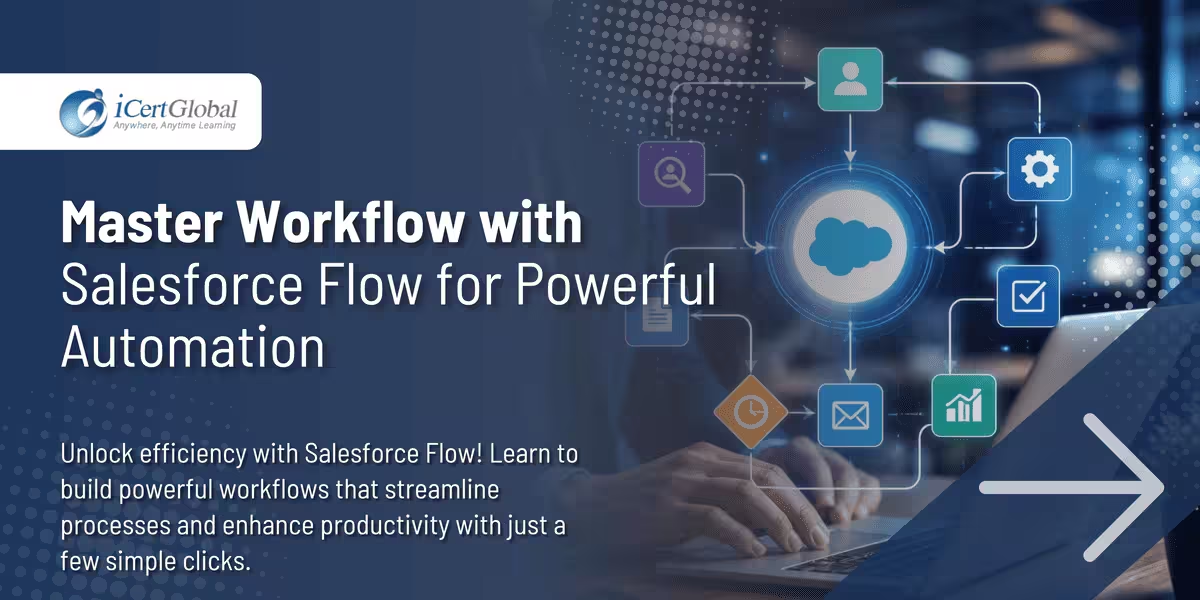
Master Workflow with Salesforce Flow for Powerful Automation
Unlock efficiency with Salesforce Flow! Learn to build powerful workflows that streamline processes and enhance productivity with just...
Top Tips for Salesforce Sandbox Management for Developers
Master Salesforce Sandbox management with key tips for developers! Optimize your deployment, and workflows to enhance productivity and...
Using Salesforce to Improve Account Based Marketing ABM
Master Salesforce Administration with our expert-led certification training. Boost your career skills in just days. Enroll now for...
Salesforce Payments Integration with Digital Wallets Ahead
Explore seamless Salesforce Payments integration with digital wallets to streamline processes, improve transaction efficiency, and enhance customer experience....
How Salesforce Admin Can Boost CRM User Adoption
Boost CRM success with effective strategies for Salesforce Admins. Enhance user adoption, engagement & transform your CRM experience...
Salesforce and Blockchain A Secure Data Management Future
Explore the future of secure data management with Salesforce and Blockchain. Discover innovative solutions for streamlined, efficient, and...

