If you're stuck handling tier-1 help desk tickets, provisioning basic network access, or passively monitoring systems, your career is limited. You understand that the network infrastructure is the nervous system of any business - especially in the high-demand, 24/7 IT environments of Blue Springs, MO - but without validated skills, you can't confidently configure routers, switches, or enforce network security. Cisco Certified Network Associate (CCNA) engineers, on the other hand, are the first line of defense, designing QoS policies, configuring routing protocols, and earning 20-35% higher starting salaries. This is not another passive video tutorial that makes you memorize the OSI layers. Our Cisco Certified Network Associate course is designed by Cisco Certified experts, including CCIEs, who have architected and secured large-scale enterprise networks in telecommunications, banking, and IT service firms across Blue Springs, MO . You'll gain practical hands-on experience with IOS command lines, advanced subnetting, VLAN configuration, ACL security, and troubleshooting techniques essential for isolating and resolving network issues under real-world pressure. Generic IT resumes are filtered out by HR systems searching for "Cisco", "OSPF", and "ACLs". The CCNA 200-301 credential ensures you stand out. It is the globally recognized standard for entry- to mid-level network engineers, validating your ability to configure, maintain, and secure enterprise wired and wireless networks. Our program focuses on the real skills demanded by recruiters: IPv4/IPv6 subnetting speed, routing protocol configuration, VLAN setup, and Access Control List management. You'll get access to dedicated lab environments, complex real-world case studies modeled on Blue Springs, MO enterprise scenarios, and 24/7 expert support to debug your most challenging network issues. Completing this Cisco Certified Network Associate course positions you as a vital, job-ready asset from day one.
Cisco CCNA Certification Course Overview in Blue Springs, MO
Cisco CCNA Certification Training Course Highlights in Blue Springs, MO
More Than a Course - It's Your Career Accelerator
CCNA 200-301 Exam Mastery
The entire curriculum is meticulously engineered to cover 100% of the single CCNA exam blueprint, focusing your time on the most heavily weighted domains.
Hands-on Configuration Labs
Gain technical fluency through dedicated practice configuring IOS routers and switches using Packet Tracer and real-world simulation environments.
Routing Protocol Command
Master the practical configuration and troubleshooting of modern routing protocols, including OSPF (Single-Area) and EIGRP, for efficient Layer 3 connectivity.
Advanced Subnetting Techniques
Learn high-speed, military-grade subnetting methods that ensure you can calculate VLSM and IPv6 addressing accurately under exam and production pressure.
Wireless and Automation Fundamentals
Gain exposure to modern network necessities: Wireless LAN (WLAN) configuration basics and introductory Network Automation/Programmability.
24x7 Expert Guidance & Support
Be worry-free as certified CCIE/CCNP level engineers are available 24/7 to solve your complex routing errors and challenging configuration issues.
Upcoming Schedule
Why Get CCNA Certified?
The Credential That Ends the Gatekeeping
Stop getting filtered out by HR systems
Secure more interview calls by meeting the CCNA keyword requirement in networking job screenings.
Unlock NOC & Mid-Level Engineering Roles
Prove your ability to configure, secure, and troubleshoot real enterprise networking environments.
Transition from Support to Infrastructure Engineer
Build the technical credibility needed to influence network stability, design, and architecture decisions.
Who This Program Is For
This certification training is ideal for:
Junior Network Engineers and NOC Technicians
IT Support Professionals
System Administrators
Network Architects / Consultants
Recent Engineering / BCA Graduates
If your career trajectory demands command over infrastructure and you are tired of being filtered out, this program is engineered to make you the certified Cisco Network Associate that businesses need.
Work Responsibilities
As a CCNA-certified network administrator, an individual's primary responsibilities include designing, implementing, and managing network infrastructures. This involves configuring routers, switches, and firewalls to ensure secure, reliable, and high-performance network communication. In Blue Springs, MO, network administrators working in small to medium-sized businesses must balance the needs of various stakeholders, including employees, customers, and management.
CCNA-certified professionals must troubleshoot network issues, optimize network performance, and implement network security measures to prevent data breaches. They must also stay up-to-date with industry trends and best practices, participating in ongoing education and training to enhance their skills. By mastering these technical skills, CCNA-certified professionals can effectively manage network resources, ensure business continuity, and minimize downtime.
Effective network administrators must have strong communication skills to collaborate with colleagues, understand stakeholder requirements, and provide regular network status updates. They must also be able to analyze network traffic, identify bottlenecks, and implement solutions to optimize network performance. By gaining these essential skills, CCNA-certified professionals can excel in their roles and contribute to the success of their organizations.
Eligibility and prerequisites
For CCNA Certification
The CCNA 200-301 certification is the foundational, yet comprehensive, networking certification. It requires no formal degree but demands technical rigor.
Growth
The CCNA 200-301 Training Program provides a solid foundation for network professionals looking to advance their careers and take on more complex roles. Upon completion, CCNA-certified professionals can pursue additional certifications, such as CCNP or CCIE, to demonstrate their expertise in specialized areas like security, routing, or switching. In Blue Springs, MO, organizations value professionals who prioritize ongoing learning, adaptability, and professional development.
CCNA-certified professionals can transition into mid-level network administration roles, overseeing the design, implementation, and management of network infrastructures. They can also move into specialized roles, such as network security or network engineering, requiring advanced technical skills and knowledge. By acquiring the CCNA certification, professionals can enhance their job prospects, increase their earning potential, and achieve career growth.
To remain competitive in the industry, CCNA-certified professionals must continue their education, staying current with the latest technologies and industry trends. They must participate in ongoing training, workshops, and conferences to enhance their skills and demonstrate their commitment to professional development. In Blue Springs, MO, organizations prioritize ongoing learning and adaptability, valuing professionals who continuously strive to improve their skills and knowledge.
Skills You Will Gain In Our CCNA 200-301 Certification Training Program
High-Speed Subnetting
Learn to calculate IPv4/IPv6 addressing and VLSM in seconds, a non-negotiable skill for both the exam and efficient real-world network design.
Layer 2 Switching Configuration
Master setting up VLANs, configuring Trunks (802.1Q), and securing the Layer 2 domain using protocols like Spanning Tree Protocol (STP).
IP Routing Protocol Implementation
Gain hands-on fluency in configuring, verifying, and troubleshooting OSPF (Single-Area) and EIGRP to ensure dynamic, optimal packet delivery across complex WANs.
Access Control List (ACL) Security
Master designing, implementing, and verifying standard and extended ACLs to enforce granular network security policies and traffic filtering at the router.
Network Address Translation (NAT)
Learn to configure Static and Dynamic NAT/PAT to efficiently manage public and private IP address space - a mandatory skill for almost every Blue Springs, MO enterprise network accessing the Internet.
Wireless and Automation Basics
Gain the foundational skills to configure a WLAN using a WLC (Controller) and understand the basic principles of network programmability (Python, JSON) for future automation tasks.
Course Modules & Curriculum
Network Fundamentals and Layer 2 Switching
Lesson 1: Internetworking Basics and OSI/TCP-IP Models
Master the core concepts: OSI layers, encapsulation, and the functions of networking devices. Understand the flow of data across the network.
Lesson 2: IP Addressing: IPv4/IPv6 and Subnetting
Learn the critical skills of IP addressing, including classes, public/private addressing, and advanced subnetting techniques such as VLSM. Master high-speed IPv6 subnetting to prepare for real-world enterprise networks. This is a core topic in the Cisco Certified Network Associate course.
Lesson 3: Cisco IOS and Layer 2 Switching
Get hands-on with the Cisco Certified Network environment. Learn to configure routers and switches using Cisco IOS, set up VLANs, configure 802.1Q trunks, and secure console access. These skills are fundamental for progressing toward the Cisco Certified Network Professional or Cisco Certified Specialist credentials.
Advanced Switching and Redundancy
Lesson 1: Spanning Tree Protocol (STP)
Master the purpose and operation of STP to prevent Layer 2 loops and ensure network stability. Learn to configure port priorities and root bridge elections, a key skill for any Cisco Certified Network Associate.
Lesson 2: Inter-VLAN Routing and Gateway Redundancy
Master configuring Router-on-a-Stick and Layer 3 Switching for Inter-VLAN communication. Introduction to First Hop Redundancy Protocols (FHRP) (HSRP/VRRP).
Lesson 3: EtherChannel and Link Aggregation
Learn to bundle multiple physical links into a single logical connection using EtherChannel. Understand link aggregation techniques to increase bandwidth and provide redundancy in core switch connections, essential for progressing toward Cisco Certified Network Professional and Cisco Certified Specialist credentials.
IP Routing Protocols
Lesson 1: Static and Default Routing
Master the configuration and verification of Static and Default Routes - the simple, reliable method for basic Layer 3 forwarding and internet access.
Lesson 2: OSPF (Open Shortest Path First)
Deep dive into the OSPF link-state routing protocol. Master single-area configuration, neighbor relationships, and troubleshooting common OSPF adjacency issues.
Lesson 3: EIGRP (Enhanced Interior Gateway Routing Protocol)
Master the configuration and verification of the EIGRP advanced distance-vector protocol, focusing on neighbor formation, DUAL fundamentals, and metric calculation.
Security, NAT, and WAN
Lesson 1: Access Control Lists (ACLs)
Master designing, implementing, and verifying Standard and Extended ACLs on routers to filter traffic based on IP addresses, ports, and protocols for security enforcement.
Lesson 2: Network Address Translation (NAT/PAT)
Learn to configure Static, Dynamic, and PAT (Port Address Translation) to enable private internal networks to communicate securely with the external Internet. This is a core topic in the Cisco Certified Network Associate course and a critical step toward Cisco Certified Network Professional certification.
Lesson 3: Wide Area Networks (WAN) and VPN Basics
Understand WAN technologies like MPLS and Leased Lines. Gain hands-on knowledge to configure point-to-point connections and grasp the fundamentals of site-to-site VPNs. These concepts are vital for Cisco Certified Specialists and Cisco Certified CyberOps Associate aspirants focusing on network security.
Wireless, Automation, and Exam Readiness
Lesson 1: Wireless LAN (WLAN) Fundamentals
Master basic concepts of RF, SSID, and channels. Learn to configure a simple WLAN using a Wireless LAN Controller (WLC) and understand security protocols (WPA3).
Lesson 2: Network Automation and Programmability
Get introduced to automation tools such as Python, JSON, and APIs. Learn how network engineers use these tools to monitor and manage network configurations programmatically. This is a key focus area in the Cisco Certified Network Associate course and prepares candidates for Cisco Certified CyberOps Associate and Cisco Certified Network Professional roles.
Lesson 3: Final Exam Strategy and Troubleshooting
Consolidate all your knowledge across lessons. Master Cisco's troubleshooting methodology, including top-down and bottom-up approaches. Practice full-length simulations to ensure first-attempt success for the Cisco Certified Specialist and other certification exams.
Microsoft Training Program Roadmap in Blue Springs, MO


Practical Application
The CCNA 200-301 Training Program equips professionals with the technical skills to configure, manage, and troubleshoot complex network infrastructures. This training program focuses on the practical application of protocols such as OSPF, BGP, and EIGRP. In a real-world scenario, network administrators must handle network congestion, packet loss, and other issues that can lead to service disruptions.
To resolve these issues, CCNA-certified professionals must have a solid understanding of network protocols, including TCP/IP, DNS, and DHCP. They must be able to prioritize traffic, set up Quality of Service (QoS) policies, and optimize network performance. In Blue Springs, MO, network administrators working with small to medium-sized businesses must stay up-to-date with the latest network technologies to ensure seamless communication and collaboration among employees.
The CCNA 200-301 Training Program provides hands-on experience in implementing network security measures, such as firewalls, access control lists (ACLs), and encryption. This knowledge is essential for protecting network assets and preventing cyber threats. By mastering these technical skills, CCNA-certified professionals can identify vulnerabilities and implement secure network configurations.
Professional Credibility
The Cisco Certified Network Associate (CCNA) certification is a widely recognized credential in the IT industry, demonstrating an individual's competence in designing, implementing, and managing network infrastructures. This certification is a valuable asset for professionals looking to advance their careers and increase their earning potential. In Blue Springs, MO, employers often require CCNA certification as a prerequisite for network administration positions.
CCNA-certified professionals possess the knowledge and skills to implement scalable network architectures, troubleshoot network issues, and ensure high network availability. They understand the fundamentals of routing and switching, including technologies like packet switching, router-on-a-stick, and VLANs. By acquiring this expertise, professionals can develop a strong professional reputation and increase their credibility in the industry.
To maintain their CCNA certification, professionals must stay current with the latest technologies and industry trends. They must participate in ongoing education and training to enhance their skills and demonstrate their commitment to professional development. In Blue Springs, MO, organizations value professionals who prioritize ongoing learning and adaptability – a key attribute of CCNA-certified network administrators.
Customer Testimonials
Hear from our successful graduates
"Enrolling in the course was seamless, and the learning portal was easy to navigate. The live sessions were interactive, and the trainers were highly skilled. I appreciated the flexible schedule and the follow-up sessions offered. I would definitely return to iCert Global for more certifications."

Catherine
"I recently completed my CSM course in Houston from icertglobal and it was one of the best experience. icertglobal management was so humble and understanding and went extra mile to adjust my last minute classroom request.The classroom course was held in Houston, USA and the trainer was by far one of the best i have came across till date.He provided us with workshops that really helped in understanding Scrum to the core.Thank you icertglobal of such a wonderful experience and keep the good work up."
Sandy Tholuchuri
"The PMP practice test and PMP exam prep questions were of great help in preparing for the project management exam. Thanks to the Trainer for all the hard work."
Kevin Chris
"I had an awesome experience with icert global, before signing up for training had a doubt on quality of training..but the trainer was so good in communicating things to each individual providing live examples.. the course content is well customized and easy to understand..Training quality and the course content is too goood..loved it.. have to thank the sales team who suggested me in choosing the course which would help me in my career growth and trust me it worked out well... Thank you guys for all your support.."
Ptek Multiples
"Fantastic training on Lean Management. It was a good learning experience that will definitely help me in my career. I would recommend iCert Global to my friends and colleagues."
Tim Malone
"Icert global really goes out of the way in assisting the applicants. The mentorship is amazing throughout the certification process. I am sure all the people associated with icert global have the same motive to help the applicants, but I would like give a special thanks to Ankita who helped me to be flawless with the procedure....."
kalp vyas
"I would like to recommend iCertGlobal to anyone who wants to enroll for ITIL certification programs. Explanations are clear, easy to understand and the course preparation is good enough to create interest in learning and prepare for the actual certification exam. I came out successful. Good work icertglobal."
Jason Walter
"The training was good, the instructor was knowledgeable, easy to understand the content, the doubts were clarified. It was on point. I was able to clear the certification exam in the first attempt. Thank you icert global team!"
Sophiya P
"Successfully completed Training and certification from iCertGlobal for PRINCE2 Foundation and Practitioner certification. Trainer was very knowledgeable and explained concepts very clearly and I am moving to USA and , hopefully, this certification helps me to secure good job in silicon valley."
Robert Williams
"Excellent to work with! Working with ICert Global on planning PMP preparation has been wonderful! I especially like the flexibility to attend online preparation. Leena and Sam have been a pleasure to work with! Thank you!"
Annette Callan
"Great! Leena and Sameer were great and helped with the registration process. Looking forward to the classes."
Annie
"The Six Sigma Lean Green Belt Class was excellent. I enjoyed learning in this online course. And I feel like I was fully prepared to take the exam"
Helen Selika Underwood
"Sam Feedback Online PMP Session This was a great experience to learn and grow with peers in project management. The diverse set of experiences and backgrounds help understand various scenarios well. The virtual aspect of the class took the learning experience to a new level and simulated a geographically diverse team in the corporate world. Sam did a great job and was very knowledgeable on PMP. Sam started each day with a review from the previous day as well as an agenda/plan and concluded each day with a recap of what had been covered and plan for the next day - very helpful."
Peter Schramm
"The trainer was very knowledgeable and very well organized. There are many real life example use cases. Great training pace and opportunities for clarification and questions. The total training time was 10am-1pm and 2-6pm (EST). Only one hour lunch break and 10 minutes break in the morning and afternoon session. We really had long days for the 35 PDU and completely justified the training."
Yanxin Gao
"Others course content is ? Others course content is remarkable. I certglobal can work on growing global partnerships."
Rufus Alexander
"LSS Green Belt Certification The training course was great and well run. I took alot from it that I will now use in my work environment. I would highly recommend this for anyone who is interested."
Drew
"Project Manager Boing It was a great class Lots of energy And I enjoyed"
Kevin Hambrice
"Sr. Project Manager, Montco Oilfield Contractors, LLC As a participant it was smooth sailing for me."
Eric Tumlinson
Corporate Training
Tailored programs for teams with enterprise support

Ready to transform your team?
Get a custom quote for your organization's training needs.
Course & Support
Everything you need to know about our training options and support
Industry Applicability
The CCNA 200-301 Training Program is applicable to various industries, including finance, healthcare, education, and government. In these sectors, network administrators play a critical role in ensuring secure, reliable, and high-performance network communication. In Blue Springs, MO, network administrators working in finance must comply with regulatory requirements, such as PCI-DSS, to protect sensitive financial data.
CCNA-certified professionals understand the fundamentals of network protocols, including TCP/IP, DNS, and DHCP. They can design and implement network architectures, troubleshoot network issues, and optimize network performance to meet the needs of their organizations. In education, CCNA-certified professionals can set up networks for e-learning platforms, ensuring seamless communication and collaboration among students and faculty.
CCNA-certified professionals can work in various settings, from small businesses to large enterprises, and in different roles, including network administration, network engineering, or network security. By acquiring the CCNA certification, professionals can demonstrate their expertise in network administration and increase their job prospects, earning potential, and career growth in the industry. In Blue Springs, MO, employers value professionals who possess the CCNA certification, recognizing its value as a widely recognized credential in the IT industry.
Build In-Demand Skills
Explore our instructor-led CCNA training to learn about the course duration, cost, eligibility, and certification process. You get practical learning, exam-focused preparation, and expert guidance. Ready to get started? Compare CCNA certification training options and choose a classroom or live online format that fits your schedule.
CCNA Training in Other Cities
Our CCNA certification training is available in major cities worldwide
Related Blogs
Stay updated with the latest insights and trends in your field
GNS3 vs Cisco Packet Tracer for CCNA Practice
Compare GNS3 vs Packet Tracer for CCNA practice. Discover which network simulator or emulator best fits your exam study plan and career goals.
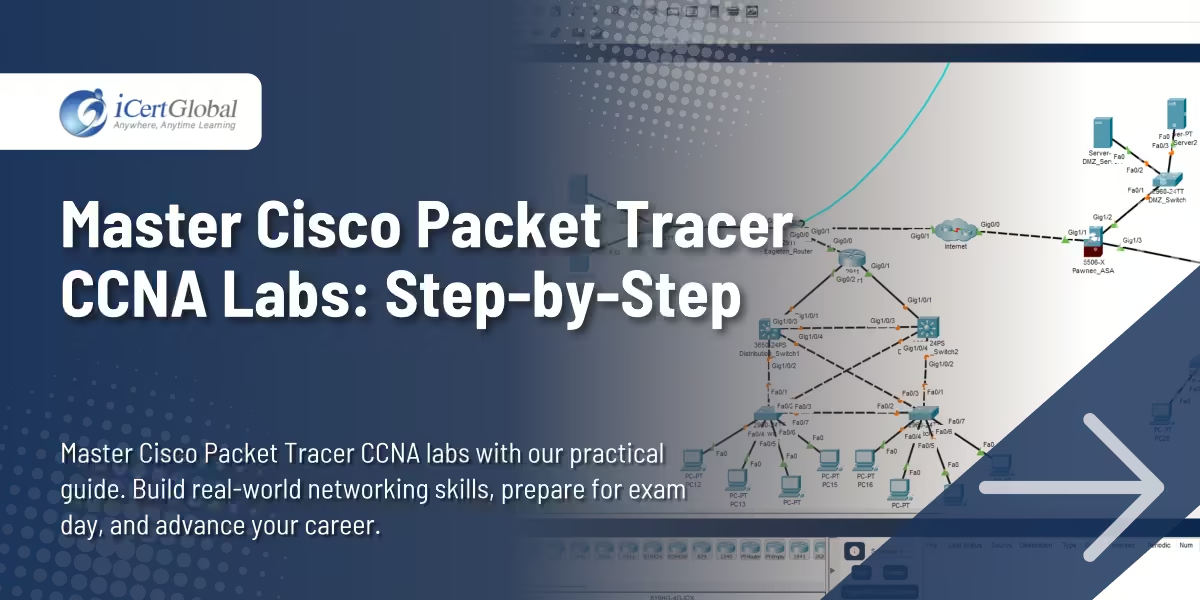
How to Practice CCNA Labs Using Cisco Packet
Master Cisco Packet Tracer CCNA labs with our practical guide. Build real-world networking skills, prepare for exam day, and advance your career.
Best CCNA Lab Tools for Beginners in 2027
Build hands-on networking skills with top CCNA lab tools. Compare Packet Tracer, CML, and simulators to pass your exam and advance your IT career.
90-Day CCNA Study Plan: Complete Roadmap to Pass
Pass your Cisco 200-301 exam with a structured 90-day CCNA study plan. Gain job-ready networking skills and advance your IT career.
CCNA Renewal Requirements: How to Recertify in 2027
Learn CCNA renewal requirements for 2027. Discover how to earn CE credits, pass recertification exams, and keep your Cisco credential active.
IPv6 Networking in 2027: Essential Concepts Every CCNA
Master IPv6 networking concepts to pass your CCNA exam and advance your career. Learn address types, auto-configuration, and real-world routing.

CCNA Interview Preparation: Top Questions, Answers, and Expert
Master your CCNA interview preparation. Learn top technical questions, expert answers, and troubleshooting tips to land your next networking job.
CCNA Exam Fees in the US: 2026 Cost
Plan your networking career. Learn the exact CCNA exam fees for 2026, explore registration tips, and discover how to schedule your 200-301 exam.

What Jobs Can You Get After CCNA?
Ready to advance your IT career? Discover the top jobs after CCNA, key responsibilities, salary potential, and how to land your next tech role.
Is CCNA Worth It in 2026?
Discover if the CCNA is worth it in 2026. Evaluate the career ROI, salary impact, and job opportunities to fast-track your networking career.
CCNA Scope & Demand in India 2026
Master CCNA scope and demand in India for 2026. Discover salary trends, high-paying networking roles, and strategies to fast-track your IT career.
CCNA 200-301 Syllabus Changes 2026: AI, Cloud, Automation
Prepare for the updated CCNA 200-301 syllabus 2026. Master AI, cloud, and automation topics to pass your exam and boost your networking career.