
You know the drill. A developer pushes a "minor" patch on Friday night. By Saturday morning, the service is down, the database is corrupted, and you are on a bridge call explaining why the rollback failed. You are fighting a war against unauthorized changes, undocumented assets, and a release process that relies on luck rather than logic. You are a victim of chaos. RCV-certified professionals are the masters of control. While others are rubber-stamping Change Requests (RFCs) or bypassing the CAB to "move fast," ITIL RCV professionals are enforcing a rigorous regime of testing, validation, and controlled deployment. They don't just "push code"; they orchestrate releases. Recruiters for high-velocity environments (FinTech, SaaS, Enterprise IT) don't want cowboys; they want Release Management ITIL experts who can ensure that speed doesn't kill stability. This isn't a theory class on definitions. Our ITIL Release Control and Validation training is a deep-dive into the mechanics of the "Transition" phase. You will learn how to run a Change Advisory Board (CAB) that actually creates value, how to build a Configuration Management System (CMS) that isn't a lie, and how to validate services so that users get what they actually asked for. We built this for the Release Managers, Change Managers, and Build Engineers who are tired of being the scapegoat for bad releases. Whether you are in Chilliwack, BC's startup ecosystem or Mumbai's banking sector, this training gives you the authority to stop a bad release in its tracks. You will learn to standardize the "Build, Test, Deploy" cycle to ensure that every change is a step forward, not a stumble backward.
ITIL RCV Training Program Overview in Chilliwack, BC
ITIL RCV Training Course Highlights in Chilliwack, BC
More Than a Course - It's Your Deployment Defense
PeopleCert Accredited
We are an Authorized Training Organization (ATO). Your credits are guaranteed to count toward your ITIL Capability Stream total.
Practical "Change" Labs
We don't just talk about RFCs. We simulate Emergency CAB meetings and standard change models to test your decision-making under pressure.
Configuration Management Focus
Learn the hardest part of ITIL - Service Asset and Configuration Management (SACM) and how to actually map CI relationships in the real world.
Exam-Centric Strategy
The RCV exam is scenario-heavy. We provide specific ITIL RCV exam tips to help you deconstruct complex transition scenarios and find the "most correct" answer.
Testing & Validation
Move beyond "Unit Testing." Learn the V-Model and how to validate service utility and warranty before go-live.
24/7 Expert Support
Stuck on a concept like the "CMS vs. CMDB"? Our experts are available around the clock to clarify the technical nuances.
Upcoming Schedule
Why get ITIL RCV Certified?
The Credential That Ends the Gatekeeping
Stop Bottleneck Perception
Stop being viewed as a bottleneck. Prove that your "bureaucracy" is actually risk management that saves the company money.
Bridge Dev-Ops Gap
Bridge the gap between Dev and Ops. RCV provides the common language and process structure that makes DevOps actually work in large enterprises.
Unlock Specialized Roles
Unlock specialized roles. Qualify for high-paying "Release Manager" and "Change Authority" positions that require certified expertise.
Who This Program Is For
This certification training is ideal for:
Change Managers / Coordinators
Release Managers / Deployment Leads
Configuration Managers (CMDB Owners)
Software Build Engineers
IT Quality Assurance (QA) Leads
Service Desk Managers (handling Requests)
If you are responsible for moving code, hardware, or services from "Dev" to "Production," this ITIL Intermediate RCV module is your mandatory professional standard.
Work Responsibilities
The ITIL Release, Control, and Validation (RCV) Training Program places a strong emphasis on the use of validation gates. These gates are used to provide a systematic approach to evaluating the release of software and other IT assets. By using validation gates, organizations can ensure that their releases meet specific criteria before they are implemented.
Validation gates involve a series of steps that evaluate the release against specific criteria, including its impact on IT services and the organization's infrastructure. This evaluation is typically conducted in collaboration with the Release Management team, who are responsible for ensuring that releases are properly planned and executed. By using validation gates, organizations can ensure that their IT services are maintained at the desired level of quality and reliability.
The use of validation gates can have a significant impact on the success of IT services in Chilliwack, BC. By ensuring that releases meet specific criteria before they are implemented, organizations can reduce the likelihood of service outages and improve the overall quality of their services.
Eligibility and prerequisites
This is an advanced Capability module. It assumes you understand the basics of the service lifecycle.
Mandatory Prerequisite: You must hold a valid ITIL Foundation certificate (v3, 2011, or ITIL 4 Foundation). You cannot sit for RCV without it.
Training Requirement: You must complete an accredited training course (like ours) to get the "Candidate Number" required for the exam.
Recommended Experience: We strongly advise candidates to have 2+ years of experience in Release, Change, or Testing environments to understand the complex scenarios.
Industry Applicability
The Release, Control, and Validation (RCV) process is a critical component of the ITIL framework. This process involves the careful planning, execution, and validation of software releases to ensure that they meet specific criteria before they are implemented. By using the RCV process, organizations can ensure that their IT services are maintained at the desired level of quality and reliability.
The RCV process involves a series of steps that evaluate the release against specific criteria, including its impact on IT services and the organization's infrastructure. This evaluation is typically conducted in collaboration with the Release Management team, who are responsible for ensuring that releases are properly planned and executed. By using the RCV process, organizations can reduce the risk of service outages and improve the overall quality of their services.
In Chilliwack, BC, the RCV process is essential for ensuring the success of IT services. By using this process, organizations can ensure that their IT services are maintained at the desired level of quality and reliability, and that they are able to adapt to changing business needs.
Skills You Will Gain In Our ITIL RCV Training Program
Change Management
Become the gatekeeper. You will learn to manage the lifecycle of all changes, enabling beneficial updates while minimizing disruption. You will master standard, normal, and emergency change models.
Release & Deployment Management
Master the rollout. You will learn to plan, schedule, and control the movement of releases to test and live environments, ensuring the integrity of the live environment is protected.
Service Asset & Configuration Mgmt (SACM)
Own the data. You will learn to identify, control, record, audit, and verify service assets and configuration items (CIs), creating a "Source of Truth" for the IT estate.
Service Validation & Testing
Trust but verify. You will learn to ensure that deployed releases and resulting services meet customer expectations and verify that IT operations can support the new service.
Request Fulfillment
Streamline the routine. You will learn to handle service requests (password resets, software installs) professionally and efficiently, separating them from Incidents.
Knowledge Management
Stop the brain drain. You will learn to gather, analyze, store, and share knowledge, ensuring the right information is available to the right person at the right time (DIKW hierarchy).
Course Modules & Curriculum
Change Management
Lesson 1: The Change Lifecycle
Master the end-to-end process. Learn to record, assess, authorize, and coordinate changes. Understand the critical difference between "Change" and "Release."
Lesson 2: Change Models
Stop treating every change the same. Learn to build Standard Change models (pre-authorized), Normal Change workflows, and Emergency Change procedures that actually work.
Lesson 3: The CAB and ECAB
Learn how to run a Change Advisory Board (CAB) that isn't a waste of time. Understand the specific role of the Emergency CAB (ECAB) during crises.
Service Asset & Configuration Management (SACM)
Lesson 1: The Configuration Model
Understand the logical model of the IT infrastructure. Learn the difference between an Asset and a Configuration Item (CI).
Lesson 2: The CMS and CMDB
Master the structure. Learn how the Configuration Management System (CMS) aggregates data from various Configuration Management Databases (CMDBs).
Lesson 3: Verification and Audit
Data rots. Learn the procedures for verification and audit to ensure your CMDB matches the physical reality of the data center.
Release & Deployment Management
Lesson 1: Release Policies & Planning
Define the rules of the road. Learn to create a Release Policy that dictates how and when software moves to production. Master the "Big Bang" vs. "Phased" deployment strategies.
Lesson 2: Build, Test, and Deploy
Manage the pipeline. Learn the mechanics of building the release package, testing it in a staging environment, and deploying it to live.
Lesson 3: Early Life Support (ELS)
The job isn't done at deployment. Learn how to structure Early Life Support to handle the immediate issues post-go-live.
Service Validation & Testing
Lesson 1: The V-Model
Validate quality. Learn the V-Model concept, mapping requirements to testing levels (Unit, Integration, System, Acceptance).
Lesson 2: Validation Strategy
Don't just test for bugs; test for value. Learn to validate that the service will deliver the required utility (fitness for purpose) and warranty (fitness for use).
Request Fulfillment
Lesson 1: Managing Requests
Stop clogging the Incident queue. Learn to separate Service Requests (standard, low risk) from Incidents (unplanned interruptions).
Lesson 2: Self-Help and Automation
Learn how to design request catalogs and self-help portals that empower users and reduce the load on the Service Desk.
Knowledge & Evaluation
Lesson 1: Knowledge Management (KM)
Capture the wisdom. Learn to manage the Service Knowledge Management System (SKMS) and the Data-Information-Knowledge-Wisdom (DIKW) structure.
Lesson 2: Change Evaluation
The final check. Learn the formal process for evaluating major changes to determine if the actual performance matches the predicted performance.
Lesson 3: Exam Strategy
Review ITIL RCV exam tips. Learn to handle the "Gradient Scoring" questions and manage your time during the 90-minute test.
ITIL RCV Certification Training Program Roadmap in Chilliwack, BC
Skill Development
The process of identifying and approving software releases is known as Change Evaluation. This process is typically managed by a Change Evaluation Team, which assesses the impact of the release on the organization's IT services. Change Evaluation involves evaluating the risks associated with a potential release, including its impact on existing services, infrastructure, and personnel.
This evaluation is often conducted in collaboration with the Release Management team, who are responsible for ensuring that releases are properly planned, executed, and validated. By carefully evaluating the release, the Change Evaluation Team can ensure that the change is properly assessed and approved before it is implemented. In Chilliwack, BC, software releases are critical to the success of organizations that rely on IT services.
Therefore, a robust Change Evaluation process is essential for identifying and mitigating potential risks associated with releases.
Growth
A key aspect of the ITIL Release, Control, and Validation (RCV) Training Program is the emphasis on controlled releases. Controlled releases involve the careful planning and execution of releases to minimize the risk of disruptions to IT services. This approach requires the use of configuration management systems to track and manage the release process.
Controlled releases also involve the use of gates to provide a systematic approach to evaluating releases. These gates act as checkpoints to ensure that releases meet specific criteria before they are authorized for implementation. By using controlled releases, organizations can ensure that their IT services are maintained at the desired level of quality and reliability.
The use of controlled releases can have a significant impact on the success of IT services in Chilliwack, BC. By minimizing the risk of disruptions to IT services, organizations can reduce the likelihood of service outages and improve the overall quality of their services.
Customer Testimonials
Hear from our successful graduates
"Exceptional PMP Training Experience with iCertGlobal I recently completed the PMP training by iCertGlobal, and I must say it was an outstanding experience. The instructor demonstrated a deep understanding of project management principles and brought real-world experience to the table. The training material's provided were comprehensive and well-organized, offering valuable insights and practical tips. I would highly recommend iCertGlobal to anyone looking for professional PMP Training.. "

John Anderson
"iCertGlobal provided a great learning experience with clear, well organised courses. The trainers were knowledgeable, and the support team was responsive to all my questions. The study material was comprehensive, which helped me pass my certification exam with ease. Highly recommended for anyone looking to get certified. "
James Walsh
"iCertGlobal is the best Certificate Training Organization. you will get good instructor and they will improve leaning sills and give the real time experience examples due to that you will get pass in first try. "
Andy Moran
"The course content, exam prep questions, interactive Q&A, and real-life examples made attending this PMP Project Management training class worth my time and money. The support from iCertGlobal was exceptional and I would like to thank them for accepting my request of meeting the trainer post the session for clearing my doubts."
Tim Malone
"I had a good learning experience with icertGlobal and it had been an amazing development journey. Actually, I accidentally bumped into iCertGlobal while searching for an online course for preparing my PMP examination. With positive reviews all over the internet and quick responses to my questions, I was flabbergasted enough to sign-up immediately. The instructor-led PMP preparatory course helped me both offline and online preparations. All the high-quality materials written in simple layman language was enough to grasp the gist of various topics. The instructors were very knowledgeable as they imparted not only their wealth of experiences but also real life examples. Thanks a lot iCertGlobal for imbibing this great learning experience. "
Jason Walter
"Thank you for your great course, great support, rapid response and excellent service."
Hoda Alavi
"My trainer made the materials relatable and easy to understand. It was fun being in class everyday. "
Cassandra Corn
"Amazing trainer who was very supportive. "

Shanna Pilgrim
"Trainer was well versed in the subject matter and got the impression the gentleman was professional and educated within standards and procedures for PMI. "
Anthony Zamora
"The Training was good and customer service was perfect. "
Maka Diakhate
"Trainer was knowledgeable and lesson's pace was just right."

Roger Gonzales
"Trainer (Bruce) was very excellent in delivery and presentation. He provided me with all the tools required to be successful in the PMP exams with lots of quiz questions on all topics reviewed. "
Bashiru Ojibara
"The trainer, Emad was top notch and very knowledgeable. He is up to date with all current versions and is great in 1:1 Training. "

Jonathan Obien
"Thank you for your great course, great support, rapid response and excellent service"

Hoda Alavi
"Marc had very good knowledge and he was able to explain the material and provide guidance to get ready for the test. "

Roque Montesino
"Excellent Course. Zahn was a great instructor and the course material definitely will help me pass the PMP Exam "

Jared Nelson
"Great teacher, went out of his way in every possible aspect. "
Radiah Sims
"Customer service provided by Robin was great as he was very responsive and the trainer, John, was very good at relating the content to my industry. "

Jason D Niebauer
"Excellent "

Roger Muyani
"The instructor (Houssin) was great. There was a lot of good course material provided. There were few exam questions outside the covered subject matter. However, I would say that the overall experience was positive and that I learned a lot. "

Mike
"Customer service provided by Robin was great as he was very responsive and the trainer, John, was very good at relating the content to my industry. "

Anthony Nguyen
"The actual class was outstanding and the on-line course was thorough and effective. I am more confident now to pass the exam. "
 Hefner.jpg)
Denise R Hefner
"The trainer was excellent. Very knowledgeable and was able to answer my questions along the way. "

Jason Blezard
"The pace of the course was good. Attending multiple sessions provided me great insights on the course. "
Keith Lowder
"Its the very useful course to complete the PMP. Sure the Provided materials will help us to clear the PMP. "

Sivanesan Viswanathan
Corporate Training
Tailored programs for teams with enterprise support

Ready to transform your team?
Get a custom quote for your organization's training needs.
Course & Support
Everything you need to know about our training options and support
Professional Credibility
The ITIL Release, Control, and Validation (RCV) Training Program provides professionals with the knowledge and skills necessary to manage the RCV process. This program covers the key concepts and practices of RCV, including the use of validation gates and controlled releases. By completing this program, professionals can gain a deeper understanding of the RCV process and its role in ensuring the quality and reliability of IT services.
Professionals who complete the ITIL RCV Training Program can expect to gain a stronger understanding of the RCV process and its role in ensuring the quality and reliability of IT services. They will also gain the knowledge and skills necessary to manage the RCV process, including the use of validation gates and controlled releases. By completing this program, professionals can demonstrate their expertise in RCV and enhance their credibility within the industry.
In Chilliwack, BC, professionals who complete the ITIL RCV Training Program can expect to enhance their credibility and career prospects. By gaining a deeper understanding of the RCV process and its role in ensuring the quality and reliability of IT services, professionals can demonstrate their expertise and commitment to excellence in their field.
Build In-Demand Skills
Explore our instructor-led ITIL Release Control and Validation training to learn about the course duration, cost, eligibility, and certification process. You get practical learning, exam-focused preparation, and expert guidance. Ready to get started? Compare ITIL Release Control and Validation certification training options and choose a classroom or live online format that fits your schedule.
ITIL Release Control and Validation Training in Other Cities
Our ITIL Release Control and Validation certification training is available in major cities worldwide
Related Blogs
Stay updated with the latest insights and trends in your field
ITIL 4 Foundation vs Practitioner: Certification Path Explained
Compare ITIL 4 Foundation vs Practitioner. Discover which certification aligns with your career goals, boosts your salary, and...
Top 10 IT Service Management Best Practices for
Explore the top 10 IT service management best practices for modern business, from ITIL 5 and AI automation...
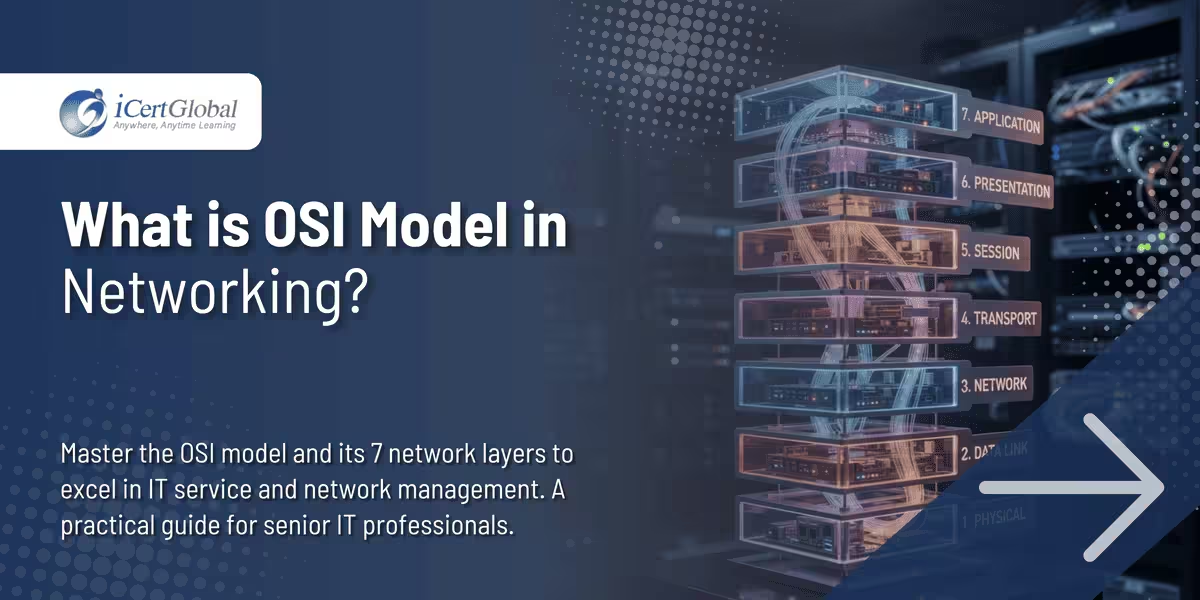
What is OSI Model in Networking
What is OSI model in networking? Learn the 7 layers, protocols, devices, how data flows, and how OSI...
7 Strong Advantages of ITIL Certification
Learn the top benefits of ITIL certification and how it boosts your IT career and organizational value....
Ensuring Tech Support Functions in Businesses
Learn how businesses keep their technology like computers and internet running well with ITSM and ITIL....
The Importance of COBIT in IT Management
Learn what COBIT is and why it matters for managing technology in businesses. ...
Guide to the Service Desk Manager Role
Learn about the key responsibilities, skills, and career path of a Service Desk Manager....
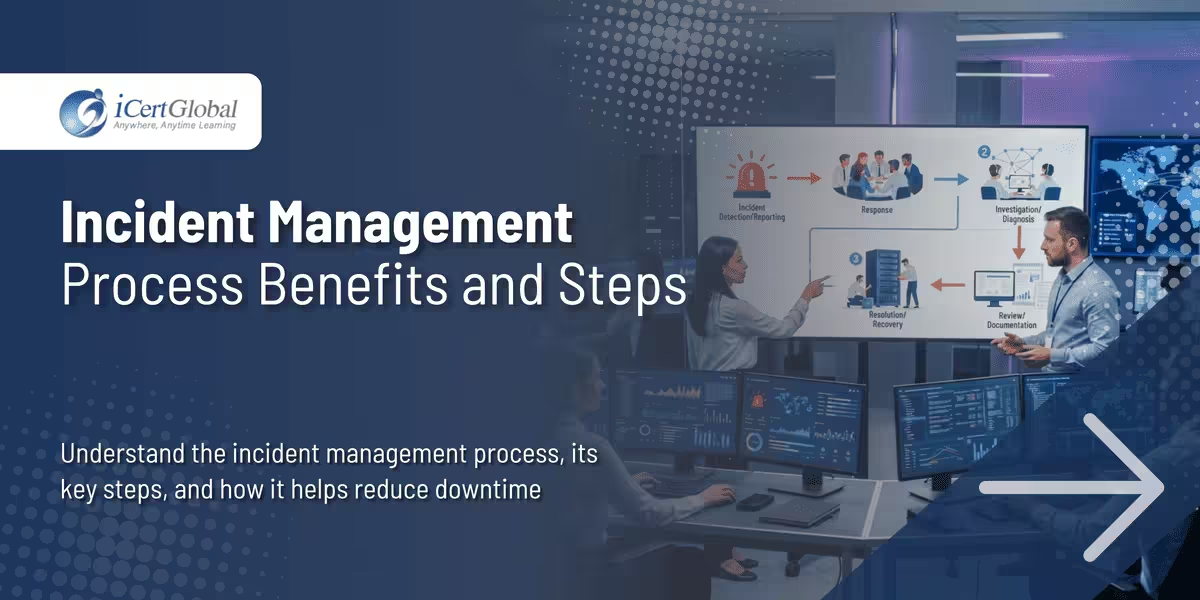
Incident Management Process Benefits and Steps
Master the incident management process to reduce downtime. Learn key steps, roles, and benefits to restore IT services...

Top Highest-Paying Programming Languages to Learn in 2026
Explore the top high-paying programming languages for 2026 and gain in-demand skills to boost your career, stay competitive,...
Top 5 Frontend Frameworks to Watch in 2026
Master frontend frameworks to accelerate your career. Compare React, Angular, Vue, Svelte, and Next.js to build modern web...


